
Spermolepis echinata
Spermolepis echinata
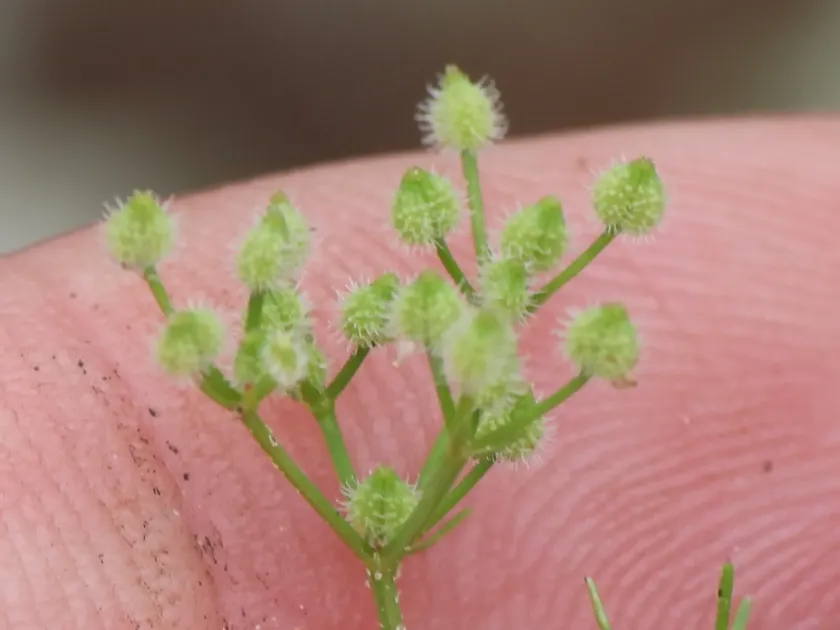
Description
Growing requirements
Spermolepis echinata is an annual herbaceous plant classified within the Apiaceae (parsley) family. It is native to North America, predominantly found in arid and semi-arid environments where it thrives in sandy, well-draining soils and open, sunny conditions.
Morphologically, the plant is characterized by a slender, branched stem that typically grows up to 40 centimeters in height. Its leaves are finely dissected, providing an elegant, delicate appearance while being structurally adapted to reduce water loss in its dry native habitats.
The reproductive strategy of this species involves the development of complex umbels featuring small white flowers. A defining feature of the species is the presence of prickly appendages on its fruit, which act as a dispersal mechanism, allowing seeds to attach to passing surfaces.
Regarding environmental requirements, Spermolepis echinata prefers habitats with minimal shading and soil competition. It is highly adapted to ephemeral growth cycles, emerging quickly after seasonal rains and completing its life cycle before the onset of extreme summer heat.
While not a traditional agricultural crop, it is studied for its role in local ecosystems and as a potential component of native plant restoration programs. Its ability to colonize disturbed areas makes it a plant of interest in ecological monitoring studies.
Main diseases and pests
Common health threats for this species include fungal infections such as powdery mildew, which often occur when environmental humidity fluctuates during the growing season. Root rot can also become an issue if the soil remains waterlogged for extended periods, as the plant is adapted to dry conditions.
The primary pests affecting Spermolepis echinata include aphids, which tend to congregate on the umbels and stems, sapping nutrients from the plant. Additionally, certain types of larvae may infest the tissue, potentially stunting growth or reducing the success rate of seed production.