
Japanese pagoda tree
Sophora japonica L.
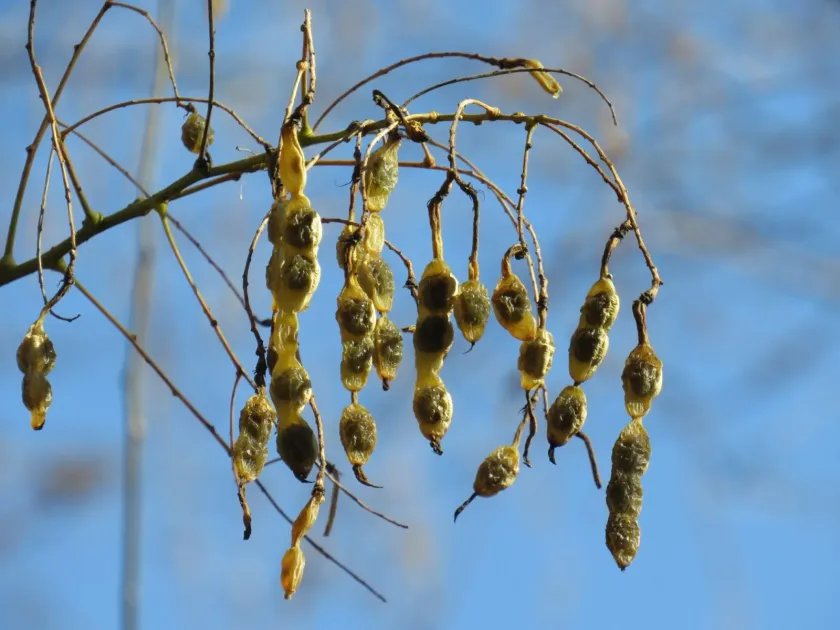
Description
Sowing dates
Propagation of the Japanese pagoda tree is typically achieved through seeds or stem cuttings. Seed coats are hard and impermeable, requiring scarification or soaking in warm water for several hours to break dormancy.
Seeds should be sown in the spring when soil temperatures have consistently risen. Greenhouse propagation is often preferred to ensure higher germination rates and stronger initial seedling development before transplanting.
When planting in rows, a spacing of approximately 50 to 70 centimeters is recommended to allow for adequate airflow and ease of maintenance. This spacing reduces the competition for nutrients among young trees.
The planting depth for seeds usually ranges from 2 to 4 centimeters. Consistent moisture levels must be maintained during the initial phase of germination to prevent the drying out of the sensitive root zone.
Softwood cuttings can be taken during the summer months. Treating these cuttings with rooting hormones enhances the success rate of root formation, allowing for faster establishment in nursery beds.
Growing requirements
The Japanese pagoda tree is a light-demanding species that thrives in full sun. Planting it in shaded locations will result in sparse foliage, stunted growth, and a loss of the tree's natural, spreading architectural form.
While mature trees are notably drought-tolerant, young specimens require regular watering during their first few years. Developing a deep, extensive root system is critical for their long-term survival in various climates.
This tree prefers deep, fertile, and well-drained soils, such as loams or sandy loams. It does not tolerate waterlogged, heavy clay soils, which can lead to root rot and other physiological stressors.
The ideal soil pH range for optimal nutrient uptake is neutral to slightly alkaline. Acidic soils should be amended with lime to ensure the tree has access to essential minerals required for healthy growth.
Young trees are somewhat sensitive to extreme cold and require protection during their first winters. As the tree matures, its hardiness increases, making it well-suited for temperate urban landscapes.
Yield
The economic value of the Japanese pagoda tree lies in its flower buds and mature pods, which are highly valued in the pharmaceutical industry. Productivity peaks as the tree reaches 10 to 15 years of age.
Flower buds must be harvested just before they open, as this is when the concentration of rutin and other bioactive flavonoids is at its highest. Precision in harvesting timing is essential for high-quality yields.
Post-harvest processing involves drying the buds in a well-ventilated, shaded area. Avoiding excessive heat is crucial to prevent the degradation of the delicate chemical compounds found within the plant tissue.
Beyond its pharmacological use, the tree is a significant nectar source, contributing to local biodiversity. It is also highly regarded as an ornamental tree due to its pollution tolerance in city environments.
Annual yields are influenced by seasonal weather patterns and tree health. Proper pruning and soil management contribute to consistent and productive harvests throughout the tree's long lifespan.
Main diseases and pests
The Japanese pagoda tree is relatively hardy, yet it remains susceptible to specific pathogens if cultural conditions are not met. High humidity levels are often a precursor to fungal infections in the canopy.
Leaf spot and bark necrosis are the primary diseases affecting this species. Management involves the prompt removal of infected branches and the application of appropriate fungicides when necessary.
Pests such as aphids and various caterpillars can occasionally cause damage to tender new growth. Regular monitoring helps detect infestations early, allowing for timely and localized intervention.
Seed-boring insects may affect the quality of harvested pods, necessitating integrated pest management strategies. Clearing away fallen debris and maintaining a clean cultivation area helps break pest lifecycles.
Long-term health is best maintained through balanced fertilization and proper irrigation. A strong, vigorous tree is naturally more resilient against the common pressures of insects and environmental diseases.