
Liquorice
Glycyrrhiza glabra L.
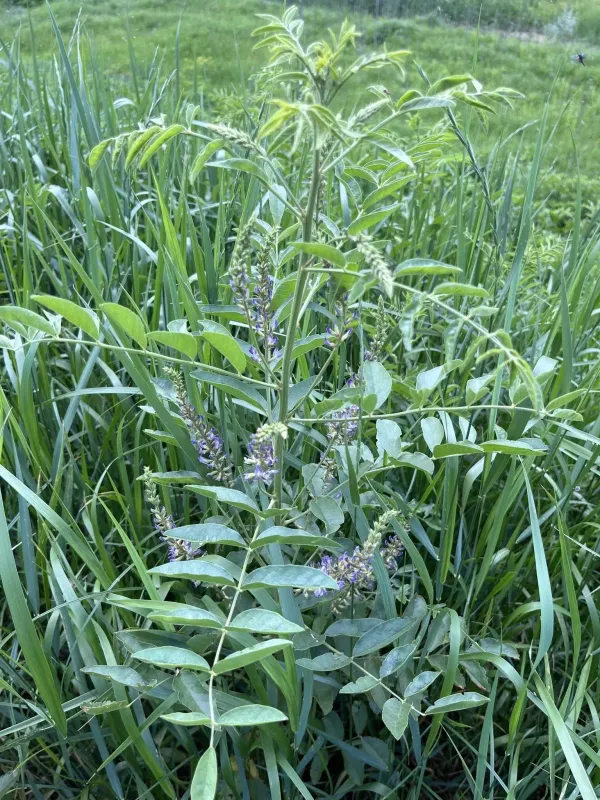
Description
Sowing dates
Liquorice (Glycyrrhiza glabra L.) is a perennial legume species primarily propagated through vegetative sections of rhizomes, each containing at least one bud.
Planting is carried out in early spring when the soil temperature consistently reaches 10 degrees Celsius, or alternatively during the autumn dormancy period.
If propagation is done via seeds, a scarification process is mandatory to break the seed coat, followed by planting at a depth of 2 cm in well-prepared beds.
The spacing between rows is typically set to 70 cm, providing sufficient room for the plant's aggressive and sprawling root system to expand fully.
Since liquorice establishes slowly during its first year, it is vital to ensure the field is free from competitive weeds that could shade out the young sprouts.
Growing requirements
The crop thrives in full sunlight and requires a warm climate to maximize the synthesis of glycyrrhizin, the primary active compound in the root.
Deep, well-drained, sandy loam soils are ideal for cultivation, allowing the roots to penetrate deeply without encountering resistance or waterlogging issues.
Liquorice exhibits high tolerance to soil salinity and can grow in various moisture regimes, provided the soil structure allows for proper aeration.
The plant performs best in neutral to slightly alkaline pH conditions, which support the activity of nitrogen-fixing bacteria residing in the root nodules.
Regular monitoring of soil moisture is recommended during the initial growth stages, while mature plants demonstrate significant drought tolerance.
Yield
Economic yields of liquorice are typically realized 3 to 4 years after planting, when root biomass and active content reach peak levels for commercial harvest.
Under irrigated agricultural conditions, the production of dried liquorice roots can reach 3 to 6 tons per hectare, depending on soil quality and crop management.
The total yield is heavily dependent on the duration of the growing season and the absence of competition from deep-rooted weeds in the plantation.
The roots are harvested for global use in the pharmaceutical industry for expectorant medicines and in the food sector as a potent natural sweetener.
Sustainable agronomic practices, such as balanced fertilization, help to increase the concentration of secondary metabolites, improving the final product value.
Main diseases and pests
Leaf-feeding insects, such as beetles and locusts, are common pests that can significantly damage the vegetative canopy, especially in young plantations.
Fungal diseases like powdery mildew and rust may occur in fields with poor ventilation or during seasons characterized by high humidity levels.
Nematodes represent a significant subterranean threat, attacking the root structure and leading to overall plant vigor loss and reduced harvest quality.
Integrated pest management, including crop rotation and field sanitation, is essential for mitigating the impact of these threats without excessive chemical use.
Preventative measures like using disease-free planting material and maintaining correct row spacing help to create an unfavorable environment for pest spread.
Harvesting
Harvesting requires heavy machinery capable of penetrating depths of 60 to 80 cm to ensure minimal root breakage and efficient extraction from the soil.
The optimal harvest timing is autumn, after the aerial parts have withered, marking the stage where nutrients have fully returned to the root systems.
Post-harvest processing involves washing the roots, trimming smaller secondary rootlets, and performing a size-based classification for uniform market quality.
Controlled drying processes are employed to reduce the moisture content to below 14%, which is critical for preventing fungal growth and spoilage during storage.
Properly cured roots are then packaged and shipped for further processing into extracts, powders, or natural flavorings for industrial end-users.