
Water chestnut
Trapa natans L. var. bispinosa (Roxb.) Makino
Description
Sowing dates
The water chestnut, scientifically known as Trapa natans, is an annual aquatic plant of the Lythraceae family. Sowing is typically carried out in the spring once the water temperature stabilizes between 15 and 20 degrees Celsius.
Successful cultivation requires a stable aquatic environment, usually a pond or slow-moving water body. The nuts are placed into the soft, muddy bottom, where they remain until the natural germination process begins.
Farmers often prepare the substrate by ensuring the bottom is rich in organic nutrients, which is essential for the rapid development of the root system and the subsequent formation of the leaf rosette.
The planting density must be carefully calculated to prevent overcrowding, as dense populations may restrict oxygen circulation in the water, posing a risk to the ecosystem.
The plant undergoes a period of growth that spans several months, during which it produces floating leaves with air-filled petioles that keep the plant buoyant on the surface.
Growing requirements
Water chestnut demands clear, sunlit water environments with minimal industrial pollution. Sunlight exposure is the most critical factor for photosynthesis, which drives the energy accumulation in the nuts.
Optimal growth occurs in water bodies with a neutral pH level. Stagnant but oxygen-rich water provides the best conditions for the plant to thrive without excessive competitive weed growth.
Temperature is a key factor; the plant is highly sensitive to cold snaps during the growing season. A long, warm summer is required for the full maturation of the fruit and the hardening of the outer shell.
Managing the water level is crucial. Significant fluctuations can leave the roots exposed or submerge the rosettes too deeply, hindering the plant's natural life cycle.
Periodic maintenance involves removing excessive algae or invasive vegetation that could compete for essential nutrients and sunlight required by the water chestnut.
Yield
The yield of water chestnut is primarily dependent on the surface area and the richness of the pond bottom. In well-managed aquatic farms, it is possible to achieve up to 1.5 tons of fruit per hectare.
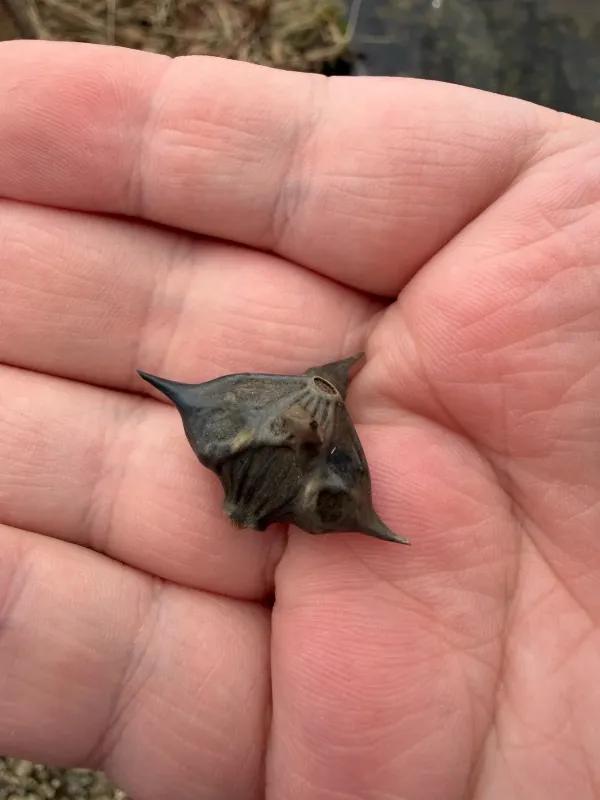
The fruit, protected by its hard, spiked exterior, contains a starchy kernel that is highly nutritious. It is rich in carbohydrates, proteins, and essential minerals, making it a valuable crop.
Economically, the product is processed into flour used in culinary applications, particularly for gluten-free baked goods and thickeners in traditional Asian cuisines.
Beyond food production, the plant has medicinal uses due to its phenolic compounds, which have shown potential in antimicrobial and anti-inflammatory applications.
High-quality yields are characterized by large, well-developed kernels, which are highly sought after in both local and export markets for their unique flavor and texture.
Main diseases and pests
Herbivorous fish, such as grass carp, represent the most significant threat to water chestnut plantations, as they consume the young shoots and leaves before the plant can mature.
Fungal pathogens and water-borne diseases can strike when water circulation is poor or if the quality of the water degrades due to high organic matter decay.
Pests, including various aquatic larvae and gastropods, can feed on the petioles, damaging the plant's buoyancy mechanism and leading to premature wilting or sinking.
Excessive siltation can lead to anaerobic conditions at the bottom, which restricts nutrient uptake and weakens the overall resistance of the plants to infections.
Environmental disasters, such as severe droughts or high-speed storm winds, can physically disrupt the surface rosettes, significantly reducing the final harvest volume.
Harvesting
The harvest occurs in late autumn when the nuts reach full maturity and sink to the bottom. In some cases, manual harvesting from boats is employed as the nuts darken.
Mechanized harvesting tools, such as specialized aquatic rakes, are used to dredge the bottom of the pond and collect the nuts after they have detached from the plants.
Once harvested, the nuts must be thoroughly washed to remove mud and organic debris before being sorted based on size and quality for further processing or storage.
For long-term storage, the nuts should be kept in a cool, humid environment. If they are intended for the next season's planting, they must be stored in water kept just above freezing temperatures.
Processing the nuts involves boiling or roasting to soften the tough, spiky shell, allowing the edible kernel to be easily extracted for consumption or further industrial use.