
Water caltrop
Trapa natans L.
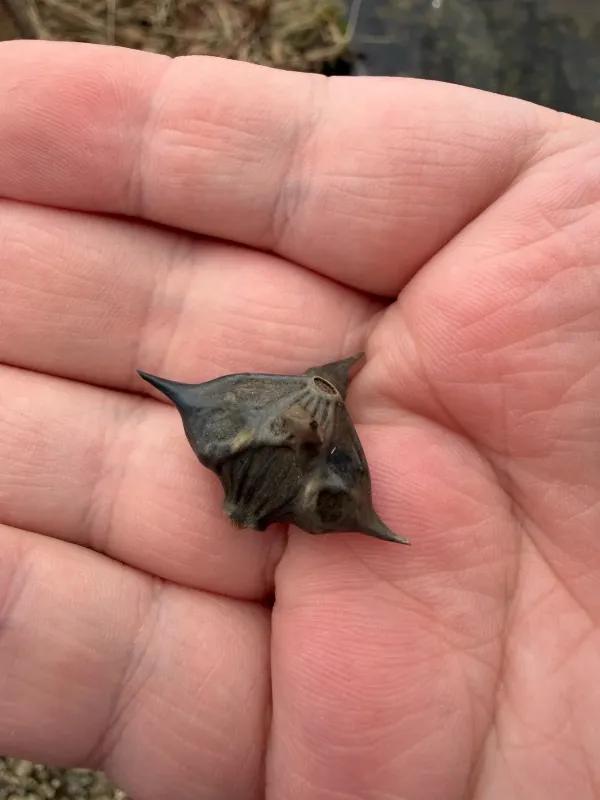
Description
Sowing dates
Water caltrop is an annual aquatic plant belonging to the Lythraceae family. The plant reproduces through seeds that overwinter in the bottom sediment of water bodies and germinate as water temperatures rise in the spring.
For cultivation, seeds should be planted directly into the muddy bottom of the pond as soon as the ice has melted and water temperatures reach at least 10–12 degrees Celsius.
The plant thrives in stagnant or slow-moving water bodies with a muddy substrate at a depth of 0.5 to 1.5 meters. Shallow areas provide better conditions for initial root establishment and growth.
When planting, it is important to maintain an spacing of about 50 centimeters between plants to allow the characteristic floating rosette to develop fully and ensure proper pollination.
The hydrological regime must be stable after sowing to prevent the seedlings from being displaced by currents or rapid changes in water levels, which can lead to crop failure.
Growing requirements
Caltrop requires a long, warm season to reach maturity. Optimal water temperatures for vigorous growth and fruit development are between 20 and 25 degrees Celsius.
The plant has a high light requirement. It performs best in open water bodies with no shading from trees or dense shore vegetation, as direct sunlight is crucial for the photosynthesis of the floating rosettes.
Water chemistry is a significant factor; the plant prefers neutral to slightly acidic conditions. High organic matter content in the silt is essential for promoting biomass production.
Agricultural practices include the regular monitoring of the water body to remove competing aquatic weeds that might steal nutrients and restrict the plant's access to light.
- Water temperature: 20–25°C.
- Fertile, muddy bottom substrate.
- Full sun exposure.
- Stable, calm water surface.
Yield
The yield of water caltrop depends on the water surface area and the health of the population. Under ideal conditions, one can harvest about 0.5 to 1.2 kg of nuts per square meter.
The ripening period occurs from late summer through early autumn, with mass harvesting taking place when the nuts become dense and sink to the pond floor.
The seeds are rich in starch, protein, and minerals, making them a valuable food source. They can be consumed boiled, roasted, or processed into high-quality gluten-free flour.
Medicinally, the entire plant is utilized for its potential antioxidant and anti-inflammatory properties, making it an interesting subject for pharmacological research.
Integrating caltrop into aquaculture systems provides dual benefits, serving as a secondary crop for human consumption while providing habitat and food for various aquatic species.
Main diseases and pests
Insect larvae that feed on the petioles of the floating leaves are common pests, which can cause the rosettes to sink, leading to the death of the plant.
Fungal infections can occur during periods of water stagnation or extreme heat, leading to leaf rot and reduced yields across the plantation.
The plant is highly sensitive to water pollution. Heavy metals and chemical run-off from nearby agricultural fields can accumulate in the plant tissue, rendering it unsafe for consumption.
Invasive species can outcompete water caltrop for nutrients and light, necessitating active management and clearing of the pond to maintain the crop's dominance.
Regular visual inspections and water quality tests are essential to identify threats early and implement management strategies to protect the crop during the growing season.
Harvesting
Harvesting water caltrop is a specialized task involving the extraction of mature nuts from the bottom of the pond after they detach from the floating mother plant.
Tools such as long-handled rakes or specialized mesh nets are commonly used to sift through the bottom mud and retrieve the heavy, thorny-cased nuts.
Immediately after collection, the nuts must be thoroughly washed to remove mud and organic debris to prevent rotting and bacterial growth during the drying process.
Drying the harvested nuts is crucial for storage. Proper drying reduces moisture content, extending shelf life and preserving the nutritional profile of the starch-rich kernels.
Once processed, the dried nuts can be stored or sold as a stable commodity, contributing to the economic viability of aquatic farming operations.