
Sinapidendron rupestre
Sinapidendron rupestre
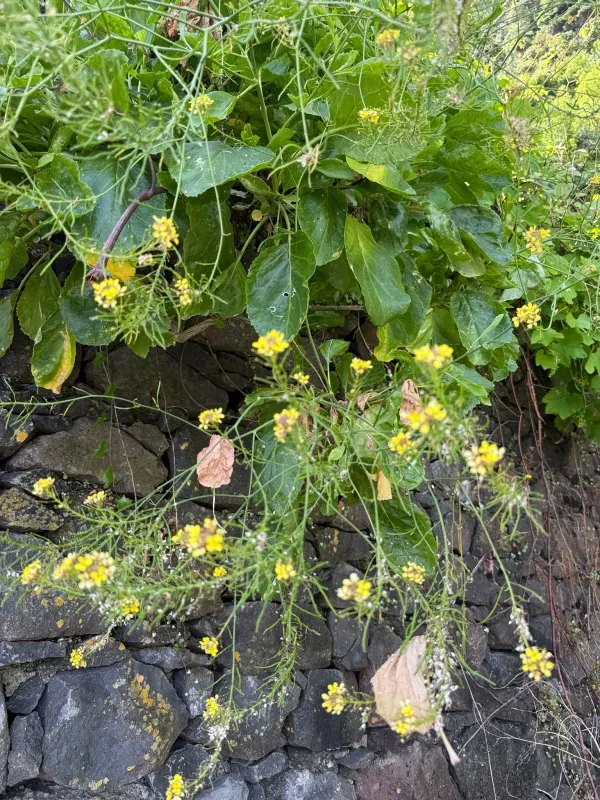
Description
Growing requirements
Sinapidendron rupestre is a perennial subshrub belonging to the Brassicaceae family. It is a highly specialized plant, morphologically and physiologically adapted to survive in harsh, rocky environments where few other species can thrive.
The plant is endemic to the island of Madeira. Its native habitat consists of steep cliffs and rocky crevices, which dictates its evolutionary strategy centered on drought tolerance and the ability to extract minerals from minimal soil volumes.
For successful cultivation, Sinapidendron rupestre requires well-drained, porous substrates that prevent root rot. It demands high light intensity, reflecting its adaptation to open, exposed cliff faces with minimal shading from surrounding vegetation.
Botanically, the species displays typical features of the mustard family but with specialized adaptations such as lignified basal stems and reduced leaf surfaces to minimize water loss. Its reproductive biology is geared towards wind pollination, fitting for the coastal environments of its origin.
Regarding its utility, the species holds significant value for botanical research and conservation programs rather than commercial agricultural production. It is cultivated in specialized nurseries and botanical gardens to ensure the preservation of this unique Macaronesian genetic resource.