
Sinapidendron angustifolium
Sinapidendron angustifolium
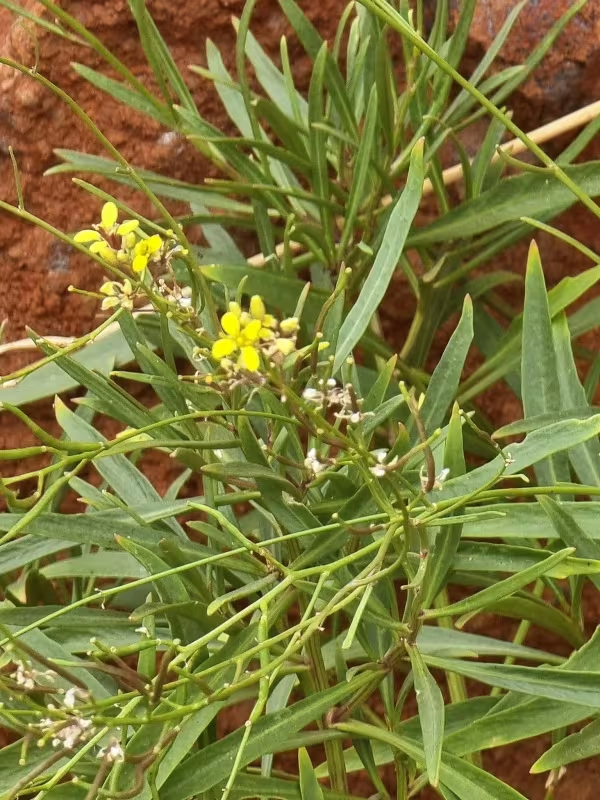
Description
Growing requirements
Sinapidendron angustifolium is a distinct species belonging to the Brassicaceae family, endemic to the island of Madeira. It is recognized as a rare plant that thrives in specific rocky habitats, showcasing the unique biodiversity of Macaronesian islands.
The plant grows as a small shrub, adapted to survive on cliff faces and steep slopes. Its ability to extract nutrients from minimal soil volumes in rocky crevices highlights its specialized evolutionary path and biological resilience.
Environmental conditions require a subtropical, maritime climate. The plant is accustomed to the mild temperatures and high atmospheric humidity found in the mountainous zones of Madeira, where it remains protected from temperature extremes.
Soil requirements focus on drainage. The species cannot tolerate waterlogged soils, as they lead to root rot; thus, stony or gravelly substrates are preferred to ensure that water drains away from the root collar efficiently.
Optimal growth is observed in areas with direct sunlight and good airflow. These conditions are essential for maintaining the integrity of the plant's succulent, leathery leaves, which are adapted to manage moisture effectively under exposed conditions.
Main diseases and pests
The primary threats to Sinapidendron angustifolium include habitat loss and competition from invasive plant species. Because its range is extremely restricted, even minor environmental shifts can impact population viability.
Pests common to Brassicaceae can cause damage to the foliage and reproductive structures. These insects are a natural part of the local ecosystem, but they can suppress the growth rate of individual plants in smaller populations.
Fungal diseases are a significant risk, particularly during periods of high humidity or stagnant air. Proper spacing and airflow are critical to preventing the onset of infections that can compromise the plant's stems and leaves.
Grazing animals represent a mechanical threat to the development of young shrubs. This herbivory pressure has historically influenced the plant's defensive strategies, making it less palatable to certain native fauna.
Conservation efforts are vital, as the species' narrow niche makes it highly sensitive to disturbances. Protecting the integrity of its native habitat remains the most effective method of mitigating risks associated with its survival.