
Oregon checker-mallow
Sidalcea oregana (Nutt. ex Torr. & A. Gray) A. Gray
Description
Sowing dates
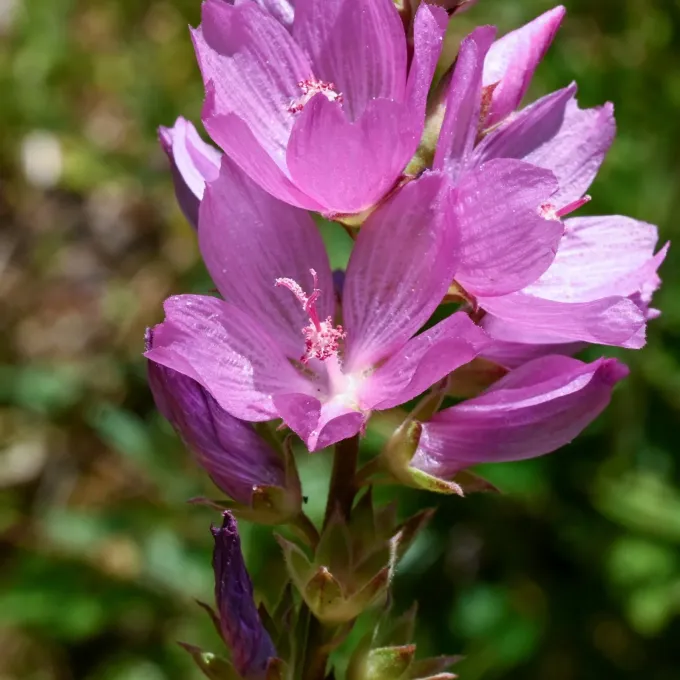
Sidalcea oregana, commonly known as the Oregon checker-mallow, is a perennial herbaceous plant belonging to the Malvaceae family.
Sowing should be performed in early spring once the danger of hard frost has passed, ensuring the soil is adequately warmed.
To improve germination rates, it is highly recommended to cold-stratify the seeds for several weeks prior to sowing them.
Seeds should be sown shallowly, as they require light exposure to trigger the germination process effectively.
If starting indoors, sow in modular trays and keep under grow lights until the seedlings are robust enough for transplantation into the open garden.
Growing requirements
The plant thrives in full sun exposure, although it appreciates some shade during the hottest parts of the day in warmer climates.
It prefers fertile, well-draining soil that retains some moisture but does not become waterlogged, which can be detrimental to root health.
Regular irrigation is essential, particularly during the active growing season to ensure the development of lush, vertical flower spikes.
It displays high tolerance to varying soil pH levels, but performs optimally in neutral to slightly acidic soil conditions.
As a hardy perennial, it requires minimal winter protection in most temperate zones once the root system is well-established.
Main diseases and pests
Common garden pests such as aphids may occasionally cluster on the tender tips of young shoots during the spring growth flush.
Powdery mildew is the most prevalent fungal threat, typically triggered by high humidity levels and limited air circulation around the plants.
To mitigate disease risks, maintain appropriate spacing between plants to facilitate good airflow and reduce leaf moisture retention.
Promptly remove any damaged or diseased foliage to prevent the spread of pathogens throughout the garden bed.
If infestations are detected, utilize targeted insecticides or horticultural oils according to the manufacturer's label instructions.
Harvesting
The primary horticultural use of Sidalcea oregana is as an ornamental plant in perennial borders, valued for its spikes of pink to lavender flowers.
For floral arrangements, stems should be harvested when the lower buds on the spike have just begun to open, ensuring longevity in a vase.
Seed collection involves gathering the mature carpels once the flower heads have turned brown and dried naturally on the stalk.
Post-harvest, seeds must be cleaned of debris and stored in a cool, dry place to maintain viability for the following season.
At the end of the season, cutting back the foliage promotes plant health and prepares the perennial for winter dormancy.