
White checkerbloom
Sidalcea candida A. Gray
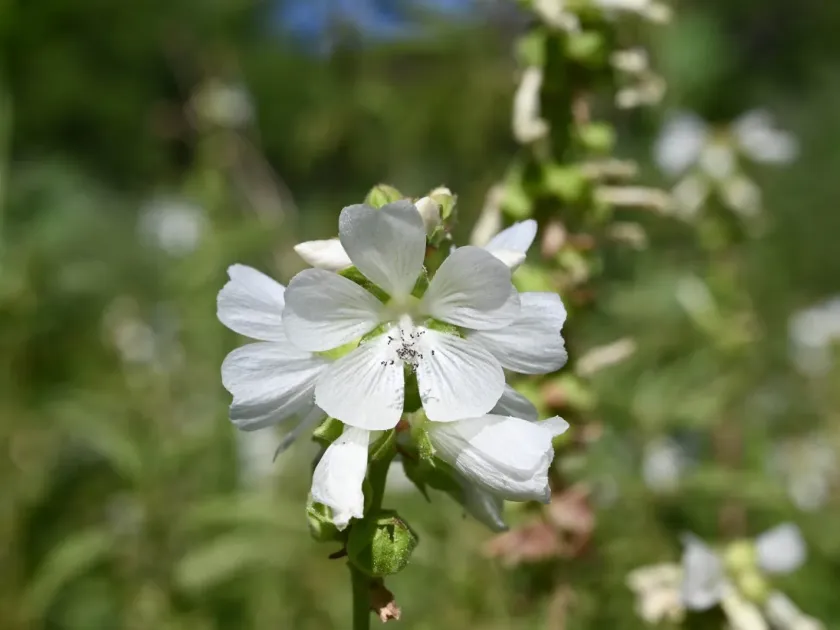
Description
Sowing dates
Sowing seeds of White checkerbloom is best carried out in the spring period when the soil has warmed sufficiently. The optimal time for direct sowing in open ground is typically the second half of April or early May.
Growing the crop through seedlings is possible for earlier flowering. In this case, sowing in containers should be done in March, with transplanting to the permanent site occurring after the threat of frost has passed.
The plant's seeds generally show good germination rates; however, cold stratification is recommended to improve the overall success rate of sprouting.
When sowing, it is critical to adhere to a planting depth of no more than 0.5 to 1 centimeter. Due to the small size of the seeds, gentle watering is required to avoid washing them away.
Spacing between plants should be at least 40–50 centimeters to ensure adequate nutrient access and proper airflow throughout the development of the bush.
Growing requirements
White checkerbloom is a member of the Malvaceae family and is a perennial herbaceous plant native to the mountainous regions of North America. It prefers sunny locations but is capable of tolerating light shade.
The crop has moderate soil fertility requirements but thrives best in light, well-drained loamy soils with a neutral or slightly alkaline pH balance.
A key factor for successful cultivation is maintaining moderate moisture levels in the substrate. The plant does not tolerate waterlogging at the roots, so a drainage layer is essential in heavier soil types.
Climatically, the plant is quite hardy and demonstrates significant winter tolerance in temperate regions. In colder northern zones, light winter protection for the root system may be beneficial.
During the growing season, the plant responds positively to the application of balanced mineral fertilizers, especially during the active phase of flower spike formation and blooming.
Main diseases and pests
The main threats to the health of the White checkerbloom are fungal diseases that thrive in high humidity conditions, such as leaf rust and powdery mildew.
To prevent the spread of infections, it is necessary to maintain proper planting distances to ensure free air circulation between individual plants and clusters.
Among the pests found on this crop, aphids and spider mites are the most common, as they multiply rapidly in hot and dry weather while feeding on the plant's sap.
Slugs and snails may cause mechanical damage to the foliage, particularly during the early spring growth phase when the plant is most vulnerable to such pests.
Disease prevention includes regular weeding, removal of faded flower heads, and timely fungicide application upon the first signs of infestation or infection.