
Oconee bells
Shortia galacifolia
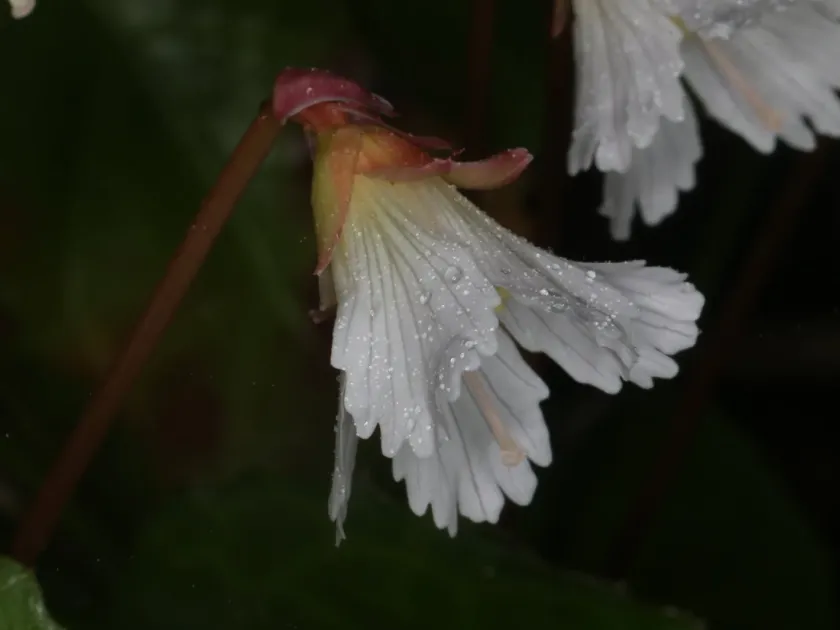
Description
Growing requirements
Oconee bells (Shortia galacifolia) is an exquisite perennial herb native to the Appalachian Mountains in the United States, belonging to the Diapensiaceae family. It is highly valued for its glossy, evergreen, heart-shaped leaves.
Botanically, the plant forms low-growing rosettes. In early spring, it produces delicate, bell-shaped white or pale pink flowers on long stalks, which contrast beautifully with the foliage that often turns bronze during winter months.
Regarding site requirements, Oconee bells thrive in environments that mimic their native forest floors. The soil must be acidic, humus-rich, and consistently moist, yet possess excellent drainage to prevent root rot.
Climate conditions play a crucial role in its cultivation. The species requires cool to moderate temperatures and high humidity. It is strictly a shade-loving plant and must be protected from direct intense sunlight to prevent leaf scorch.
Agrotechnical practices center on maintaining an undisturbed, moss-covered, or leaf-mulched substrate. Propagation is best achieved through division of mature clumps in late summer or early autumn, ensuring that each segment retains viable root portions.
Main diseases and pests
The primary threats include fungal pathogens such as Phytophthora, which thrive in stagnant, poorly drained soils. Providing a well-aerated, loose medium is the most effective preventative measure against these infections.
Slugs and snails are the most common pests, especially in moist, shaded environments where Oconee bells are planted. Regular monitoring and the application of physical barriers or organic bait are necessary to protect new growth.
Soil pH levels are critical; alkaline conditions lead to severe iron chlorosis, which stunts growth and causes the leaves to pale. Constant monitoring of soil acidity is essential for maintaining the vigor of the plant.
Desiccation during cold, dry winter spells can be detrimental. In regions with harsh, dry winters, providing a layer of evergreen boughs or straw mulch helps preserve soil moisture and protects the crown from drying out.
Inappropriate water quality is a subtle but significant threat. Use of hard water containing high levels of calcium or chlorine will gradually alter the soil chemistry, leading to a long-term decline in plant health.