
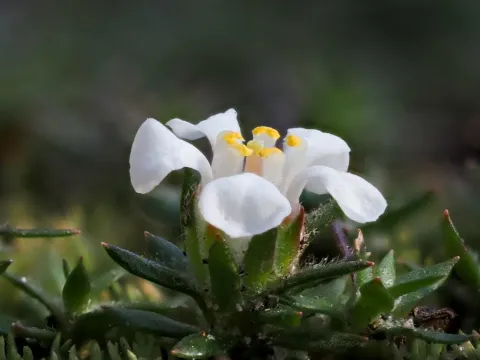
Pyxidanthera
Pyxidanthera
Pyxidanthera, commonly known as flowering moss or pine-barren beauty, is a genus of prostrate evergreen shrubs within the Ericaceae family. Its most notable species, Pyxidanthera barbulata, is cherished for its tight, cushion-like growth habit that blankets the ground.
What the section contains

Pyxidanthera
Originating from the sandy, acidic pine barrens of the Atlantic coastal plains in the United States, this plant is highly adapted to nutrient-poor soils. Its natural habitat is characterized by moist but well-drained conditions, which is crucial for its survival in cultivation.
Successful growth requires a specialized substrate with a low pH, typically ranging between 4.0 and 5.5. The medium must be composed of organic matter like peat moss mixed with clean silica sand to ensure both moisture retention and aeration.
The plant thrives in partial shade, particularly in climates with hot, intense summers. Providing adequate humidity and protection from drying winds is essential to maintain the health of the dense foliage mats which can easily scorch if exposed to direct sunlight.
In terms of usage, Pyxidanthera is predominantly utilized as a premium ornamental plant for rock gardens, peat gardens, or specialized alpine collections. Its slow growth rate and unique aesthetic qualities make it a highly sought-after species for serious plant collectors.
Root rot is the most significant threat to Pyxidanthera, primarily triggered by poorly drained soils or excessive overhead irrigation. Once the root system is compromised, the cushion-like structure rapidly loses its vitality and integrity.
Fungal pathogens such as Phytophthora are notorious for attacking these shrubs, especially in humid conditions with limited airflow. Implementing a rigorous fungicide program and ensuring proper drainage can help mitigate these serious risks.
Spider mites pose a consistent threat during the summer months, particularly when humidity levels drop. These pests feed on the tiny leaves, causing significant discoloration and weakening the plant's ability to survive subsequent winter dormancy.
Mealybugs are also a concern, as they hide within the dense, crowded branches of the plant. Their presence is often detected only after the foliage begins to show signs of decline, necessitating the use of systemic insecticides or manual removal.
Incorrect soil pH remains a physiological threat that leads to micronutrient deficiencies, particularly iron chlorosis. Without maintaining the specific acidic requirements of the soil, the plant loses its deep green color and exhibits stunted growth patterns.