
Diapensia
Diapensia
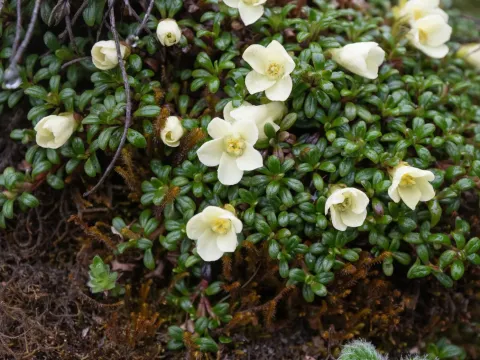
Diapensia is a genus of low-growing evergreen shrubs belonging to the Diapensiaceae family. In cultivation, these plants are valued for their exceptional resistance to extreme temperatures and their ability to form dense, cushion-like mats that look spectacular in landscape design.
What the section contains

Diapensia
The natural range of the plant covers arctic and subarctic zones of the Northern Hemisphere, as well as alpine regions. In natural habitats, it grows on rocky screes, in the tundra, and on mountain slopes where soils are nutrient-poor but possess excellent drainage.
Successful cultivation requires mimicking the conditions of a rocky tundra. The soil should be acidic or neutral, loose, sandy-gravelly, with minimal organic content. A crucial condition is maintaining constant moisture for the roots while avoiding waterlogging, which is fatal to the root system.
The crop is highly light-demanding and does not tolerate shading by taller neighbors. In terms of agronomy, it prefers a cool climate, which makes cultivation difficult in regions with hot summers, as the plant quickly loses its ornamental value and overheats.
Economic use is limited to ornamental gardening. Diapensia is planted in alpine gardens, gravel gardens, and containers, where it serves as a slow-growing but very stable and long-lived groundcover element.
The main threats to Diapensia are fungal diseases that develop in high humidity combined with poor air circulation. When water stagnates near the roots, root rot develops quickly, which is almost impossible to stop in the later stages.
Among pests, spider mites and aphids pose the greatest danger, as they can attack young growth during periods of prolonged heat. Regular inspection of the clumps helps to timely identify the insects and apply safe insecticides or acaricides.
It is also essential to protect plants from weed competition, which can quickly stifle the slow-growing Diapensia cushions. Mulching with fine gravel is a mandatory agronomic practice that protects the root collar from overheating and contact with damp soil.
In winter, rodents can cause damage by building nests under the dense mat of the plant. Prevention includes using deterrents around the perimeter of the planting area during the autumn season.
The critical factor for survival is the correct choice of a planting site with good drainage. Any violation of irrigation protocols or the choice of overly fertile soil leads to a weakened immune system of the plant and its subsequent death from secondary infections.