
Setcreasea
Setcreasea
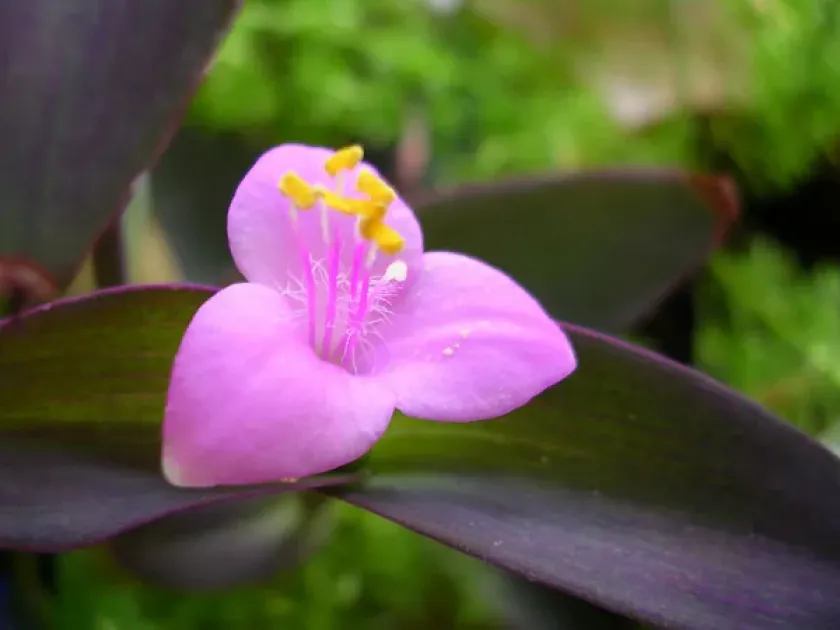
Description
Growing requirements
Setcreasea, scientifically known as Tradescantia pallida, belongs to the Commelinaceae family. This perennial herbaceous plant originates from Mexico and is highly valued for its striking purple foliage and trailing growth habit.
The plant features succulent-like stems that store moisture, allowing it to survive in environments with periodic drought. Its botanical structure is optimized for rapid vegetative propagation, making it an excellent candidate for ground cover and container planting.
Regarding light requirements, Setcreasea thrives in full sun or bright filtered light. High light intensity is essential to maintain the deep purple pigmentation of the leaves; otherwise, the plant tends to become leggy and loses its vibrant color.
Soil management for this culture requires a well-draining, porous medium. A mixture of peat, perlite, and standard potting soil provides the necessary aeration to prevent root rot, which is the most common issue in poorly managed environments.
Temperature regulation is critical for healthy development. The optimal range for active growth is between 18 and 26 degrees Celsius. While it can withstand temporary temperature drops, it is sensitive to prolonged freezing conditions and must be protected during winter.
Main diseases and pests
The primary threats to Setcreasea are related to moisture management. Overwatering, especially in cooler climates, leads to stem and root rot caused by various fungal pathogens. Maintaining a dry-down period between waterings is essential.
Pest management focuses largely on spider mites and mealybugs. Spider mites are particularly problematic in dry indoor environments where they feed on leaf sap, leading to stunted growth and discolored, mottled foliage.
Mealybugs can often be found in the leaf axils, protected by white cottony secretions. Effective control requires targeted insecticidal soaps or systemic treatments applied periodically until the infestation is eradicated.
Good cultural practices, such as providing adequate air circulation and removing dead plant tissue, significantly reduce the risk of infestation and infection. Hygiene in the growing area is a key pillar of crop maintenance.
Monitoring the undersides of the leaves for early signs of pests allows for early intervention. Prompt action ensures that the decorative value and structural integrity of the plant remain intact throughout the growing season.