
Sesamoides interrupta
Sesamoides interrupta
Description
Growing requirements
Sesamoides interrupta is a herbaceous species belonging to the Resedaceae family. Naturally occurring in Mediterranean climates, this plant is remarkably adapted to arid environments, often found in rocky, sandy, or calcareous soils where nutrient content is low. Its evolutionary strategy focuses on water retention and efficient resource use.
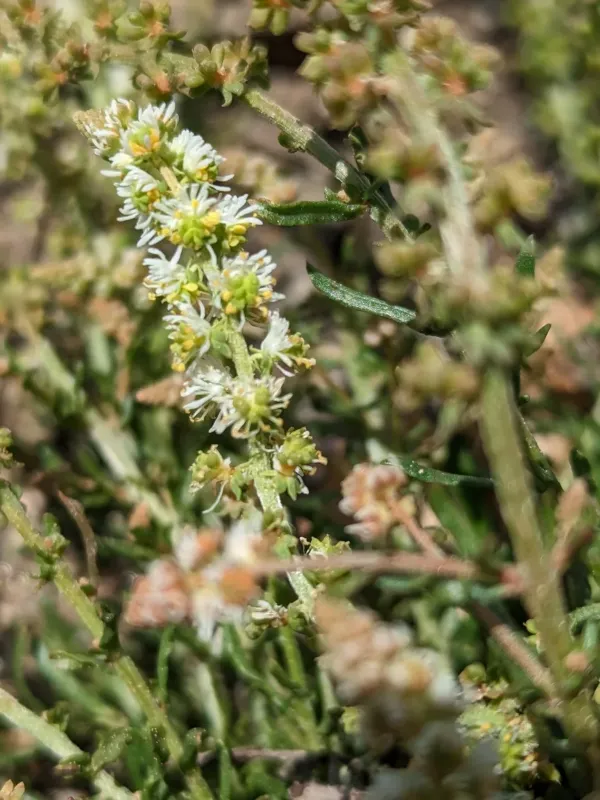
Botanically, the plant is characterized by a basal rosette of linear leaves and a distinctive, elongated racemose inflorescence. The name 'interrupta' refers to the specific pattern of its flowers, which are arranged in clusters along the stalk with visible gaps. This structural uniqueness makes it easily identifiable within the Resedaceae family.
Regarding soil requirements, Sesamoides interrupta thrives in well-drained substrates. It exhibits a strong intolerance to waterlogging, which necessitates light, porous soil conditions for healthy root development. It performs optimally in alkaline to neutral pH soils, mimicking the mineral-rich but low-humus conditions of its native habitat.
Environmental conditions for the plant include a preference for long, sunny days and moderate to high thermal zones. Its agronomic profile emphasizes low maintenance, as the plant is biologically optimized for survival in harsh conditions. It does not require intensive fertilization, making it a sustainable option for specialized agricultural or ecological projects.
Economic and utility applications are currently focused on its potential as a drought-resistant ornamental or as a candidate for soil stabilization in arid regions. While not a commercial staple crop, it remains a valuable subject for botanical research due to its hardiness and ability to thrive in poor soils that exclude more demanding industrial crops.