
Serianthes robinsonii
Serianthes robinsonii
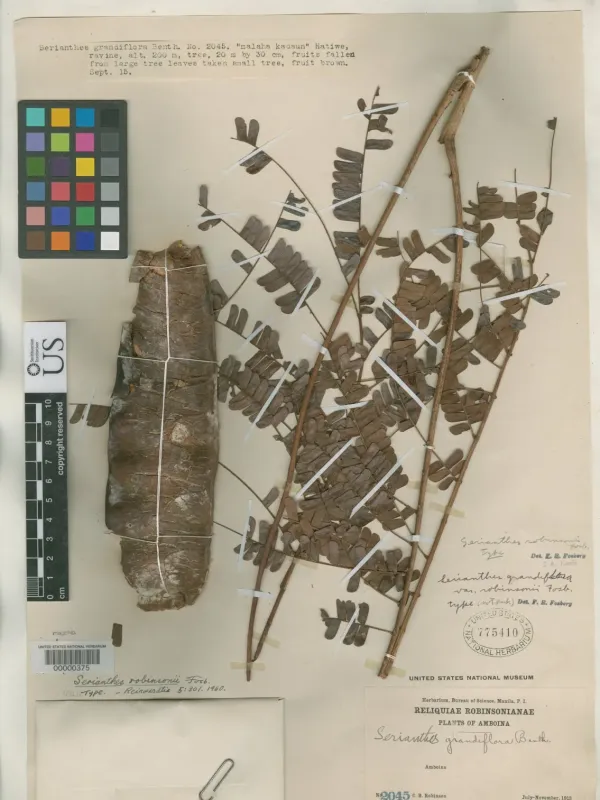
Description
Growing requirements
Serianthes robinsonii is a distinct member of the Fabaceae (Legume) family, primarily known for its presence in isolated tropical island ecosystems. This woody plant species thrives in stable, humid environments that characterize its native Pacific range.
The climate requirements include consistent tropical temperatures with minimal seasonal fluctuation. The plant relies on high humidity levels and requires protection from extreme weather events that can cause physical damage to its canopy.
Regarding soil conditions, it prefers well-drained, porous substrates. Like many legumes, it benefits from soils that allow for good oxygen exchange at the root level, which is critical for maintaining the health of the plant's root system in tropical climates.
Botanically, the plant displays characteristic pinnate leaves and a canopy structure adapted to maximize light interception. It demonstrates specific adaptations to forest gaps, allowing it to compete with other native vegetation for resources.
The primary use of this species involves conservation biology. Because it is often categorized as rare or endangered, agricultural and forestry efforts are currently focused on ex-situ propagation and habitat restoration initiatives.
Main diseases and pests
The most significant threat to the survival of Serianthes robinsonii is habitat loss and the ongoing degradation of tropical forest ecosystems, which limits its ability to naturally reproduce.
Invasive plant species pose a severe threat by outcompeting native seedlings for space, nutrients, and sunlight, often preventing young trees from reaching maturity.
Insect pests, including various foliage-feeding beetles and caterpillars, can significantly impact tree health by consuming young, nutrient-rich leaves during the rapid growth phase.
Soil-borne pathogens may lead to root rot if the plants are situated in areas with poor drainage or during prolonged periods of excessive rainfall that saturate the ground.
Changes in global climate patterns, specifically extended drought cycles, place physiological stress on the trees, making them more susceptible to subsequent environmental pressures.