
Serianthes nelsonii
Serianthes nelsonii
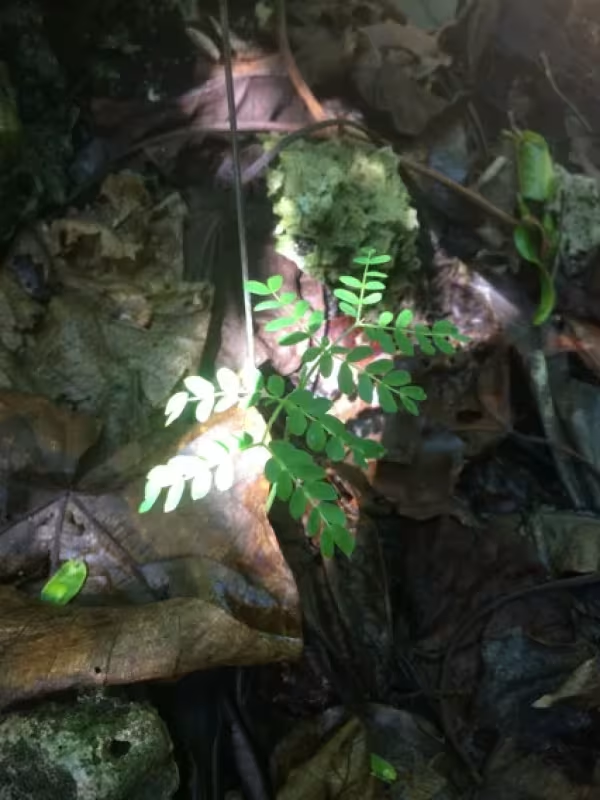
Description
Growing requirements
Serianthes nelsonii is a rare tropical tree species belonging to the Fabaceae (legume) family. It is endemic to the limestone forests of the islands of Guam and Rota in the Mariana Islands chain.
The tree is known for its impressive size and feathery, bipinnate leaves. It grows in shallow, rocky limestone soils, demonstrating a specialized adaptation to nutrient-poor but well-drained substrate conditions.
Regarding climate, the plant thrives in a tropical maritime environment. It requires high relative humidity and consistent warmth, being unable to withstand cold temperatures or prolonged droughts.
Agricultural efforts are focused on ex-situ conservation. Propagation is conducted in controlled environments, requiring meticulous attention to moisture levels and soil structure to mimic the native forest floor.
The species holds no agricultural utility in terms of production. Its economic value is strictly scientific and ecological, as it is a flagship species for regional conservation and habitat restoration projects.
Main diseases and pests
The most significant pest affecting Serianthes nelsonii is the caterpillar of the butterfly Prosotas nora, which consumes reproductive buds and prevents successful seed production.
Introduced ungulates, particularly wild deer and pigs, pose a severe threat by grazing on seedlings and saplings, which effectively eliminates natural recruitment in the wild.
Fungal pathogens and root rot are common threats when plants are cultivated in poorly ventilated or excessively damp conditions within nursery settings.
Catastrophic weather events such as intense typhoons cause severe physical damage, breaking branches and uprooting trees, which poses a constant threat to the remaining mature specimens.
Invasive weed species compete with Serianthes nelsonii for space and sunlight, often overgrowing the slow-growing seedlings before they can establish a dominant position in the canopy.