
Selliguea feei
Selliguea feei
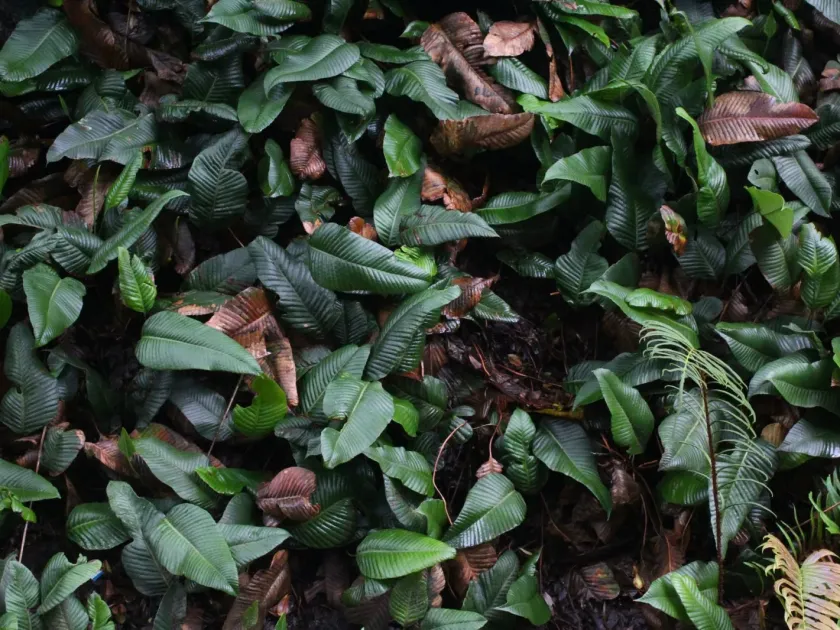
Description
Growing requirements
Selliguea feei is a species of perennial fern belonging to the Polypodiaceae family. Naturally found as an epiphyte or lithophyte in the lush tropical forests of Southeast Asia, this plant has adapted to survive on tree trunks and rocky surfaces where organic matter accumulates.
The plant is characterized by its simple, leathery fronds that emerge from a creeping, scaly rhizome. This morphological structure allows the plant to efficiently manage its water reserves, which is a crucial adaptation for life in high-humidity canopy environments.
To cultivate Selliguea feei successfully, growers must prioritize maintaining high ambient humidity levels, ideally above 70%. It performs best in conditions with bright, indirect light, as direct exposure can scorch the fronds and lead to a rapid decline in plant vitality.
A well-draining, airy substrate is mandatory for healthy root development. A mixture consisting of pine bark, perlite, sphagnum moss, and charcoal is recommended to mimic the natural epiphytic growing conditions and prevent compaction of the root system.
Stable temperatures ranging from 20°C to 26°C are required for optimal growth. The plant is highly sensitive to cold drafts and rapid temperature fluctuations, which can trigger stress responses such as leaf drop and growth cessation.
Main diseases and pests
The primary threats to this fern are fungal pathogens, which thrive in waterlogged conditions and poorly ventilated spaces. Root rot is the most common result of overwatering and excessive accumulation of moisture in the substrate.
Pests, particularly scale insects and mealybugs, are frequent invaders that target the leathery fronds. Furthermore, in environments with inadequate humidity, spider mites can become a significant issue, causing extensive damage to the foliage and hindering photosynthesis.