
Small seligeria
Seligeria pusilla
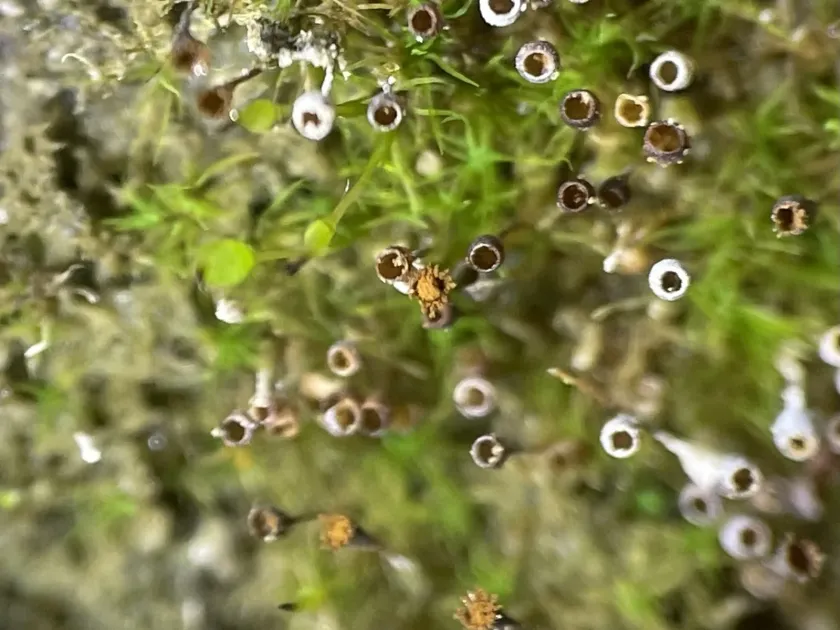
Description
Growing requirements
Small seligeria (Seligeria pusilla) is a tiny bryophyte species belonging to the Seligeriaceae family. It is important to emphasize that this organism is not an agricultural crop but a wild species of ecological interest.
The plant is a specialized calcicole, meaning it thrives specifically on limestone rocks and outcrops. Its distribution is entirely dictated by the presence of calcareous substrates, where it occupies micro-niches inaccessible to vascular plants.
The environmental requirements include high humidity levels and shaded or semi-shaded exposure. Unlike crops, it does not require soil cultivation or fertilization, relying instead on minerals leached from the host rock.
Botanically, it forms extremely dense and small tufts. The gametophytes are barely visible to the naked eye, and the sporophytes are raised on short stalks, reflecting a specialized evolutionary adaptation to nutrient-poor cliff faces.
In terms of economic or agricultural utility, this species serves as a bioindicator for limestone ecosystem integrity. Protection of its habitat is essential for maintaining biodiversity in its native geographical range.
Main diseases and pests
Major threats to Seligeria pusilla populations include habitat fragmentation, quarrying, and industrial air pollution which alters the pH of the limestone surfaces it inhabits.
Due to its specialized cliff-dwelling nature, the species is not susceptible to typical crop pests or agricultural pathogens, but it is highly sensitive to micro-climatic shifts and lack of surface moisture.