
Blindia caespiticia
Blindia caespiticia
Description
Growing requirements
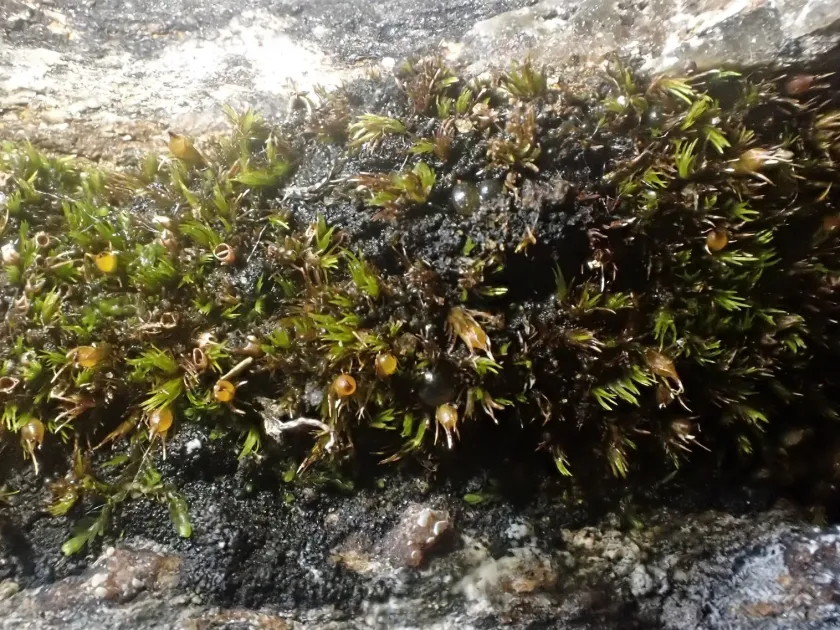
Blindia caespiticia is a perennial moss species belonging to the family Seligeriaceae. This plant is known for its ability to form dense, cushion-like tufts, which are highly efficient at retaining moisture in the harsh environments where it naturally thrives.
Botanically, the species is characterized by its subulate-lanceolate leaves and short, upright stems. These features allow it to anchor securely onto rocky substrates, primarily in alpine, arctic, and subarctic regions where atmospheric moisture is frequent.
The habitat requirements for this moss are quite specific: it demands cool temperatures, consistent moisture, and clean, unpolluted air. It is typically found on wet rocks, cliff faces, and by the banks of cold mountain streams, where it utilizes mineral surfaces to anchor its growth.
In terms of environment, Blindia caespiticia is highly sensitive to desiccation and direct solar radiation. The plant relies on its compact structure to create a microclimate within its tufts, which helps it maintain water potential even during dry spells.
While this moss does not have agricultural applications or cultivation potential, it serves as a crucial bioindicator. Its presence in an area indicates high air quality and a stable, undisturbed ecosystem, as the species cannot tolerate chemical pollution or excessive sedimentation.
Main diseases and pests
Climate change poses the most significant threat to Blindia caespiticia, particularly as the recession of glaciers and changes in precipitation patterns lead to the drying up of its specialized habitats.
Industrial pollution, especially sulfur and nitrogen deposits, can disrupt the fragile physiological processes of the moss, leading to reduced growth and reproductive failure.
Physical habitat destruction caused by mining, infrastructure development, or intense human activity in mountainous regions directly removes the substrate required for colonization.
Biological threats include the potential encroachment of larger, more aggressive plant species that can displace moss colonies once the local climate conditions become warmer and more favorable for vascular plants.
Conservation of the specific rocky ecosystems where this moss grows is essential, as there is currently no method for artificial propagation or large-scale restoration of these moss colonies.