
Blindia acuta
Blindia acuta
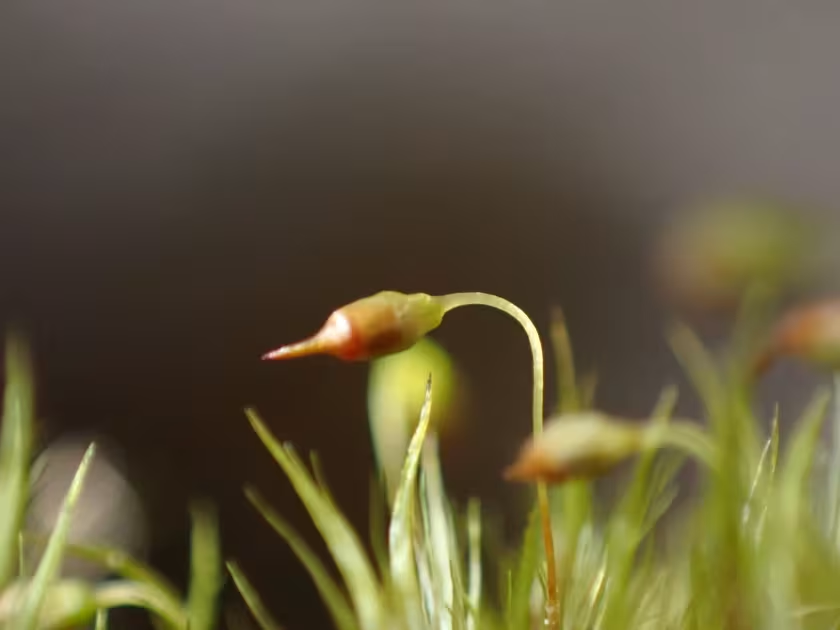
Description
Growing requirements
Blindia acuta is a perennial moss species belonging to the Dicranaceae family. While it is not a cultivated agricultural crop, it is a significant organism in ecological studies, particularly in mountainous and northern wetland environments.
The distribution of Blindia acuta spans across the Northern Hemisphere, where it typically inhabits submerged or periodically flooded rock surfaces. Its natural habitat is characterized by cool temperatures and clean, flowing water, which supports its specialized growth requirements.
Botanically, the species is defined by its compact, dark-colored tufts. Its leaves are linear-lanceolate and stiff, which provides the plant with the necessary structural integrity to survive in high-velocity water environments near stream banks and rocky seepages.
Regarding environmental requirements, the plant is an obligate hydrophyte. It thrives in habitats with constant moisture levels and high dissolved oxygen content. It does not tolerate desiccation or high levels of anthropogenic pollution, which limits its presence to pristine areas.
In terms of practical utility, Blindia acuta is recognized primarily as a bioindicator for water quality and ecosystem health. Its presence in agricultural watersheds indicates well-preserved aquatic ecosystems, which indirectly contributes to the sustainability of the broader landscape.