
Brachydontium trichodes
Brachydontium trichodes
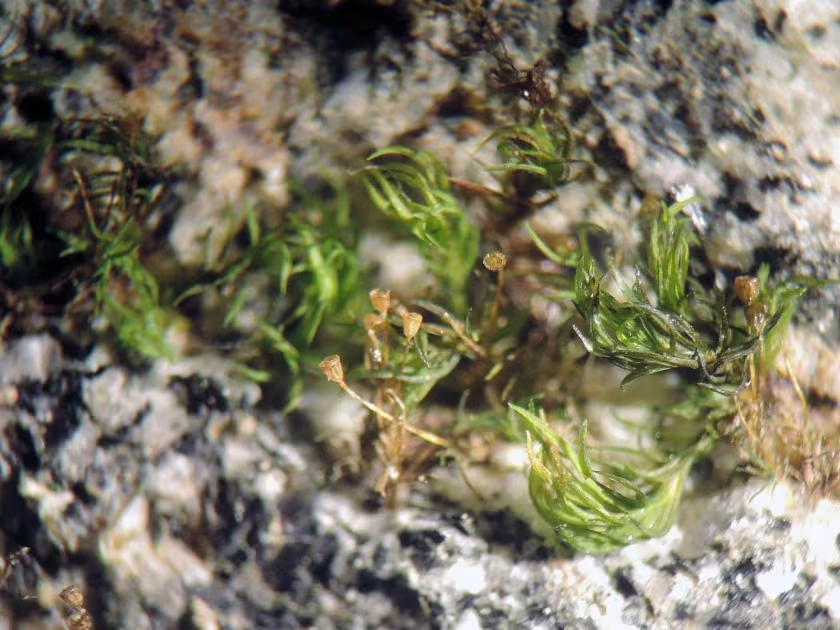
Description
Growing requirements
Brachydontium trichodes is a rare species of moss within the Seligeriaceae family. It is not an agricultural crop in the traditional sense, but rather a wild bryophyte that thrives in highly specialized and protected natural environments.
This moss typically colonizes damp, shaded rocky surfaces, including limestone or sandstone outcrops. The primary requirement for its development is a consistently high humidity level and protection from direct solar radiation, which prevents desiccation of the delicate tissues.
The ecological niche of this species is narrow, favoring stable microclimatic conditions where temperatures remain relatively constant. The substrate must offer specific chemical properties, often associated with mineral-rich rock crevices that support moss growth and nutrient cycling.
Morphologically, the species is characterized by its minute size and delicate structure. The life cycle depends on the effective dispersal of spores, which require a very specific, moist substrate to successfully germinate and form protonemata in the early stages of life.
Cultivation of Brachydontium trichodes in agricultural settings is currently non-existent. Due to its conservation status and extreme sensitivity to environmental changes, research is focused primarily on in situ conservation and habitat protection rather than artificial propagation.
Main diseases and pests
Anthropogenic pressure represents the most significant threat to the survival of this species. Habitat loss resulting from industrial activities, such as quarrying or construction, can permanently destroy the delicate micro-habitats essential for the survival of this moss.
Environmental pollution, particularly acid rain and changes in atmospheric chemistry, poses a major risk. As an indicator species, it rapidly declines when exposed to contaminants that alter the pH levels of the rock surfaces it inhabits.
Climate change and prolonged drought periods are major stressors. Since the moss lacks advanced physiological mechanisms for long-term water storage, extensive periods without moisture significantly hinder its reproductive capacity and overall vitality.
Potential threats include competition from more aggressive plant species and colonization by fungal pathogens during periods of stagnant air and excessive humidity. These infections can lead to tissue necrosis and the rapid decline of entire moss cushions.
Effective management requires strict protection of known sites and careful monitoring of environmental factors. There are no commercial uses for this species, as its value lies entirely in its role within the ecosystem and its scientific importance as a rare biodiversity component.