
Violet tree
Securidaca longepedunculata
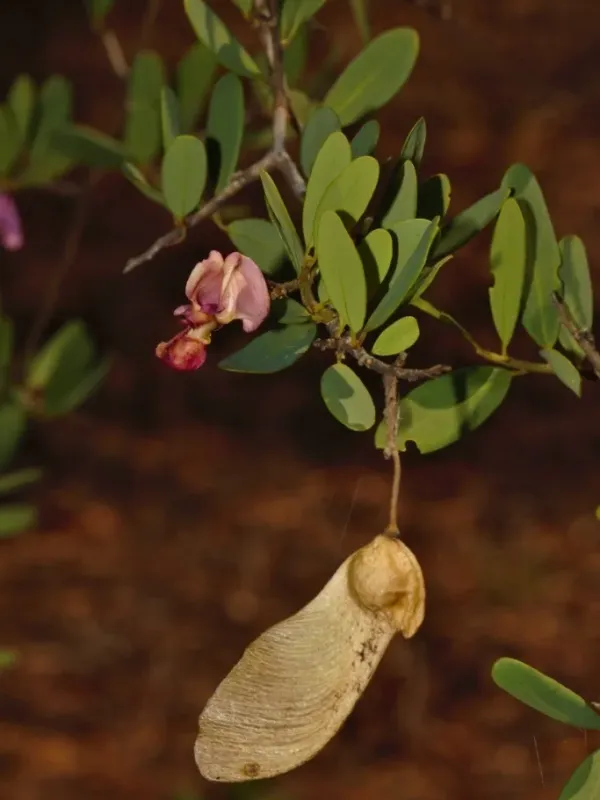
Description
Sowing dates
Sowing of Securidaca longepedunculata is typically performed at the onset of the rainy season to capitalize on naturally available moisture for seedling establishment. Seeds are sown into nursery beds with a well-drained medium to encourage robust root system development before field transplanting.
Due to the hard seed coat, scarification or pre-soaking in water is often employed to break dormancy and increase germination rates. Careful monitoring of soil moisture during the first few weeks post-emergence is crucial to ensure high survival rates among young saplings in the field.
Growing requirements
The violet tree belongs to the Polygalaceae family and is a prominent woody plant native to the tropical savannahs of Africa. It thrives best in well-drained, sandy, or gravelly soils where water stagnation is avoided, as the species is highly susceptible to root decay under anaerobic conditions.
Sunlight exposure is a critical factor for the growth of this species; it requires full sun to maintain healthy physiological activity and to produce the high concentrations of medicinal compounds found in its bark and roots. It is well-adapted to semi-arid regions with distinct wet and dry seasons.
The plant demonstrates significant tolerance to periodic drought, once established, thanks to its deep taproot system. Temperature stability is essential, as the species is intolerant to frost and requires consistently warm tropical conditions to thrive and produce its characteristic purple or violet flowers.
Main diseases and pests
Typical threats include fungal pathogens that exploit high humidity and poor ventilation to infect the trunk and root zones. Implementing proper spacing between individual trees during planting is the primary cultural practice used to mitigate the risk of disease transmission within the population.
Insects such as foliage-eating larvae and sap-sucking pests can cause significant damage to young plantations during the growing season. Integrated pest management, focusing on early identification and maintaining plant vigor, remains the most effective strategy for managing these threats.
Harvesting
Harvesting of the bark and root material is conducted according to sustainable practices to avoid killing the tree, as these parts are highly valued in traditional medicine. Mature trees are selectively pruned or sampled, ensuring that enough plant biomass remains for continued growth and potential seed production.
The optimal harvest time is typically during the dormant or slow-growth season when the concentration of active medicinal compounds is often most stable. Proper drying and processing techniques are applied immediately after harvest to preserve the chemical integrity of the collected plant parts.