
Scutia myrtina
Scutia myrtina
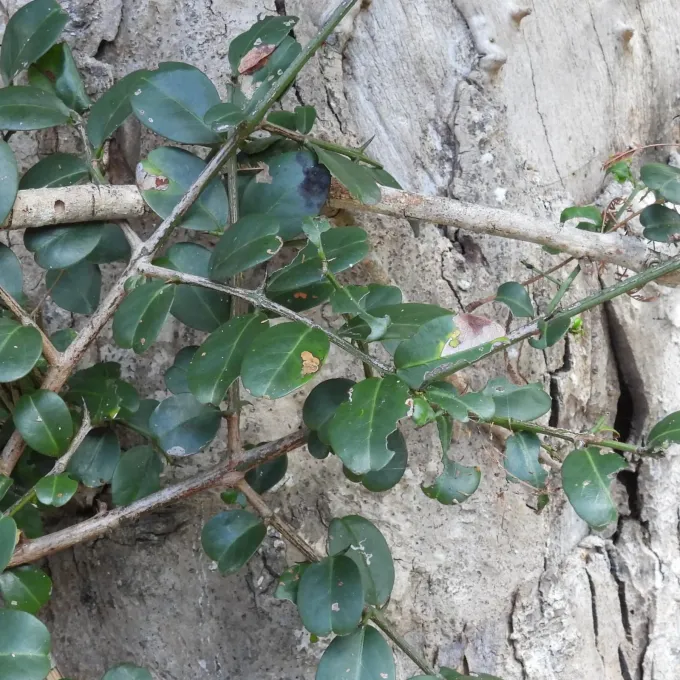
Description
Growing requirements
Scutia myrtina, commonly known as cat-and-thorn, is a robust evergreen shrub belonging to the Rhamnaceae family. It is native to tropical and subtropical regions of Africa, Madagascar, and parts of the Indian Ocean islands, thriving in diverse ecological niches.
The plant exhibits high adaptability to various soil types, though it prefers deep, well-drained loamy soils. For optimal growth, it requires full sun exposure, which ensures both the density of the foliage and the productivity of the fruit-bearing branches.
Temperature requirements are stringent, as the species is sensitive to prolonged frost. In temperate climates, it is best suited for greenhouse environments or conservatory planting where microclimates can be controlled.
Botanically, Scutia myrtina is defined by its thorny, spreading branches and leathery, opposite leaves. Its architectural structure is naturally compact, making it an excellent candidate for managed topiary or security hedges.
Cultural practices include moderate water application, especially during the establishment phase, and periodic pruning to maintain shape. It benefits significantly from organic mulching and nitrogen-based fertilizers during the active growing season.
Yield
The primary agricultural interest in this species lies in its edible drupes. These small, dark-colored fruits are harvested for their sweet flavor and are traditionally consumed fresh by local communities in its native range.
Beyond human consumption, the plant serves a vital role in land management. Its thorns make it an impenetrable barrier, often used by farmers to contain livestock or to create protected corridors that prevent soil erosion on steep terrain.
The timber quality of Scutia myrtina is highly regarded for its density and hardness. It is frequently utilized in rural crafts, tool handle manufacturing, and as a superior source of firewood due to its slow-burning characteristics.
Recent interest in sustainable permaculture systems has highlighted the potential of Scutia myrtina as a multipurpose species. It provides food, protection, and habitat, fitting well into diverse agroforestry models in tropical regions.
While still considered a minor crop, the biological diversity provided by this shrub supports local pollinators, contributing to the overall health of the agricultural landscape where it is grown.
Main diseases and pests
Generally, Scutia myrtina is a hardy plant with few natural enemies in its native habitat. However, indoor or greenhouse cultivation can occasionally attract common pests such as spider mites, aphids, or scale insects.
Root rot remains the most significant physiological threat, typically induced by poor drainage or overwatering. Maintaining a porous soil structure is essential to ensuring long-term plant viability and disease prevention.