
Scutia buxifolia
Scutia buxifolia
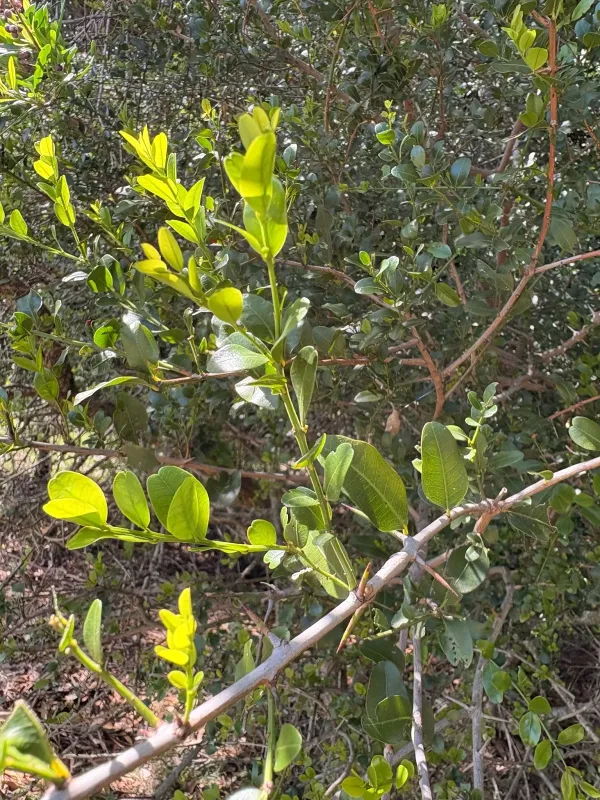
Description
Growing requirements
Scutia buxifolia, belonging to the Rhamnaceae family, is an evergreen woody plant native to the South American continent, specifically the regions of Brazil, Argentina, and Uruguay. It is well-adapted to savanna-like habitats and forest edges.
The plant requires well-draining soils to thrive, as it cannot tolerate waterlogging in the root zone. It is naturally resilient to periodic droughts, which allows it to persist in various climatic conditions within its native range.
Regarding climate, Scutia buxifolia prefers mild to warm temperatures. While it can tolerate some fluctuations, it is generally sensitive to hard frosts and performs best in sheltered, sun-exposed locations.
Agronomic management involves maintaining soil nutrient levels through balanced fertilization. Regular monitoring of the soil pH is recommended, as this species prefers substrates in the slightly acidic to neutral range.
Economically, the plant is valued for its dense, high-quality wood used in small-scale carpentry. Additionally, its evergreen foliage makes it a preferred species for creating windbreaks and ornamental hedges in managed landscapes.
Main diseases and pests
The most common biological threats to Scutia buxifolia include fungal infections that thrive in environments with poor air circulation and excessive humidity levels.
Pest pressure often comes from sap-sucking insects, including aphids and various scales, which can stunt vegetative growth if populations remain uncontrolled over time.
To maintain plantation health, it is essential to ensure proper spacing between trees, which facilitates natural airflow and reduces the risk of fungal pathogen accumulation.
Chemical control via systemic insecticides is an option, but integrated pest management strategies are preferred to sustain the ecological balance of the cultivated area.
Regular pruning is not just a stylistic choice but a vital agronomic practice that helps in removing dead or diseased wood and promoting the overall vigor of the plant structure.