
Drooping bulrush
Scirpus pendulus Muhl.
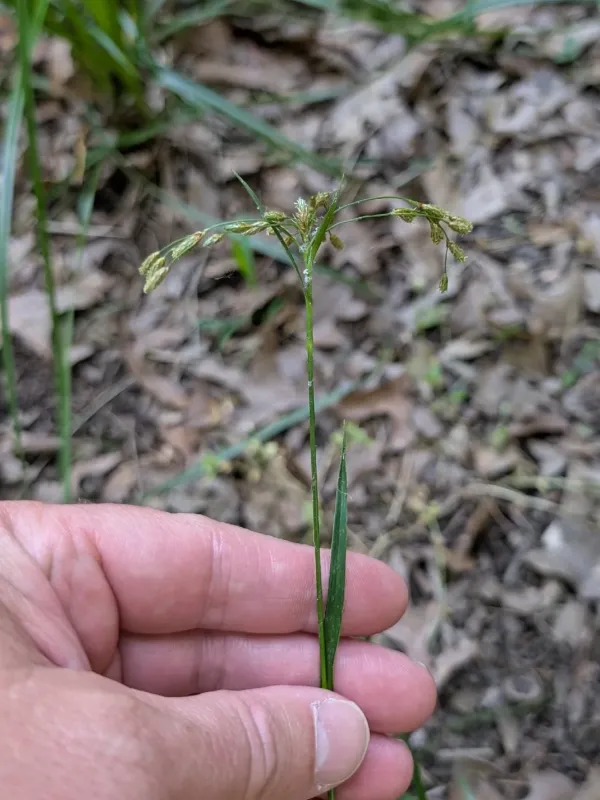
Description
Growing requirements
Drooping bulrush (Scirpus pendulus) is a perennial herbaceous plant belonging to the Cyperaceae family. It is recognized for its unique inflorescence architecture and adaptability to semi-aquatic environments, making it a valuable species in wetland ecology.
The plant originates from North America, where it naturally inhabits moist meadows, marshes, and the margins of ponds and streams. Its growth habit is characterized by clump-forming stems that require consistent moisture to thrive in domestic or commercial applications.
Sunlight exposure is a critical requirement for this species. While it can withstand partial shade, optimal health and dense foliage development are observed when the plant receives full sunlight for the majority of the day.
Soil requirements involve nutrient-rich, moisture-retentive substrates. It performs best in heavy, silty, or clayey soils that mimic the natural hydrological conditions of a wetland. It can tolerate shallow standing water, which serves to suppress competing terrestrial weeds.
Regarding climate adaptation, the drooping bulrush is notably hardy. It survives low winter temperatures without requiring insulation, allowing it to be integrated into landscape projects across various temperate zones without significant risk of frost damage.
Main diseases and pests
The main pests affecting Scirpus pendulus are sap-sucking insects, such as aphids, which tend to congregate on the succulent stems and developing seed heads. These infestations, if left untreated, can result in stunted growth and chlorosis.
Fungal diseases are the primary pathological threat, particularly during periods of high humidity and stagnant air. Rust and leaf spot pathogens can manifest as discolored areas on the foliage, eventually leading to premature tissue necrosis.
Cultural control remains the most effective management strategy. By maintaining appropriate plant spacing, gardeners ensure adequate airflow, which is a key preventive measure against the development and spread of moisture-loving fungal spores.
Sanitation is essential; removing dead biomass at the end of the season prevents the accumulation of inoculum for the following year. This simple step significantly reduces the likelihood of recurring fungal issues in the established planting.
Finally, controlling invasive wetland weeds is crucial during the plant's establishment phase. Because the drooping bulrush is not an aggressive colonizer in its early stages, it requires manual weeding to secure its position in the desired landscape area.