
Sea clubrush
Scirpus maritimus L.
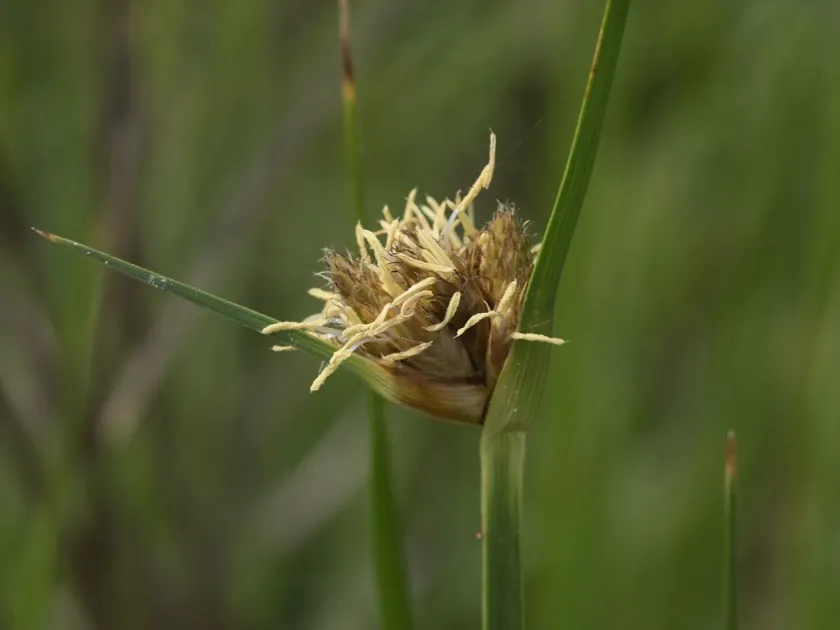
Description
Growing requirements
Sea clubrush, scientifically known as Scirpus maritimus L., is a perennial herbaceous plant belonging to the Cyperaceae family. It is a robust hydrophyte, highly adapted to saline and brackish environments, often found in salt marshes and coastal wetlands.
The plant possesses a unique architecture consisting of rhizomes that terminate in tubers, which act as energy storage organs. This adaptation allows the species to survive in challenging environments where water levels and salinity fluctuate significantly throughout the year.
Regarding soil requirements, Sea clubrush prefers nutrient-rich, moist, and even saturated substrates. While it shows high tolerance to alkalinity and high salt concentrations, it thrives best in conditions where moisture remains available during the active growing season.
From an agricultural standpoint, it serves as a valuable forage resource for local wildlife and, in some systems, as a forage supplement for livestock. Its role in stabilizing wetland soil against erosion is another significant environmental benefit of this plant.
However, farmers often view it as a competitive weed in cultivated wetland crops. Due to its aggressive vegetative propagation through tubers, management requires sophisticated drainage control and tillage techniques to keep populations under control.
Main diseases and pests
The primary threats to Sea clubrush include large-scale wetland reclamation and drainage for infrastructure or intensive crop development. These human-induced changes destroy the necessary hydrological conditions for its persistence.
Disease pressure, primarily from fungal pathogens causing rust and smut, can significantly reduce biomass accumulation. In moist conditions, these infections spread rapidly, negatively impacting the health of the rhizome network.
Various insect pests, including stem borers and certain aphid species, can infest the stalks and tubers, causing physiological stress. Proper management of wetland edges is necessary to prevent severe outbreaks during the peak growing season.
Chemical pollutants, especially those leaching from nearby intensive agricultural areas, can compromise the water quality. Sea clubrush is sensitive to certain broad-spectrum herbicides, which can lead to local population declines.
Invasive non-native vegetation poses another significant threat to Sea clubrush. As a native species in many regions, it may lose its habitat to more aggressive, exotic weeds that utilize available space and resources more efficiently.