
Schizanthus wisetonensis
Schizanthus wisetonensis
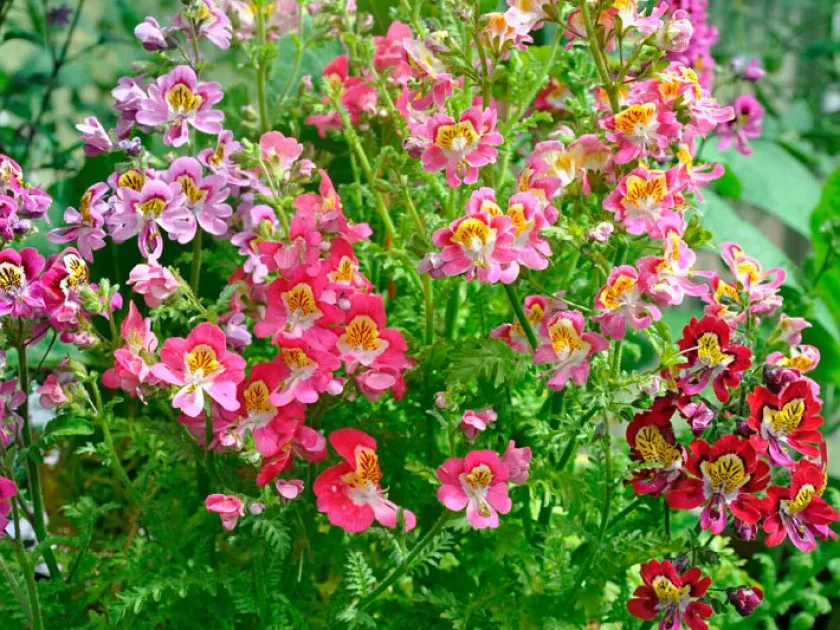
Description
Sowing dates
Schizanthus wisetonensis, commonly known as the butterfly flower or poor man's orchid, is a hybrid species belonging to the Solanaceae family. It is widely cultivated for its intricate, orchid-like blooms.
Seeds are typically sown indoors during late winter or early spring. Because the seeds are tiny, they should be sown on the surface of a fine, moist potting mix and kept under light to germinate.
A temperature range of 18-20 degrees Celsius is optimal for germination. Seedlings usually emerge within three weeks, at which point they should be moved to a cooler environment to prevent legginess.
Seedlings should be pricked out into individual containers once they develop their first set of true leaves. Extreme care must be taken to minimize root disturbance during this process.
Once the risk of frost has passed, plants can be transplanted into the garden. They prefer a spot that receives morning sun but is shaded from the harsh afternoon heat.
Growing requirements
This species thrives in well-draining, fertile soil. It is essential to ensure that the soil does not retain excessive moisture, as the plant is prone to root rot in waterlogged conditions.
Schizanthus wisetonensis prefers cool, temperate climates. It performs best in areas where summers are not excessively hot, as high temperatures often lead to stunted growth and flower drop.
Regular but moderate watering is necessary. It is crucial to water the soil directly rather than wetting the foliage, as this helps maintain plant health and reduces the risk of fungal infections.
Fertilization with a balanced, water-soluble fertilizer applied every two weeks helps maintain constant blooming throughout the season.
Pinching back the growing tips of young plants is a recommended practice to encourage branching and the development of a bushier, more compact growth habit.
Main diseases and pests
Common pests include aphids and whiteflies, which tend to congregate on the undersides of leaves. These pests weaken the plant and can facilitate the spread of viral diseases.
Fungal issues, particularly powdery mildew and root rot, are common if the plants are crowded or if air circulation is insufficient within the planting area.
Effective management of these pests involves using horticultural soaps or systemic insecticides designed for ornamental plants, applied as soon as the first signs of infestation appear.
Fungal diseases are best managed by ensuring proper spacing between plants and applying appropriate fungicides when necessary. Removing infected foliage is essential to contain the disease.
Maintaining consistent environmental conditions is the best form of preventative care. Proper drainage and balanced irrigation significantly reduce the susceptibility of the plants to these common threats.