
Comb fern
Schizaea fistulosa
Description
Growing requirements
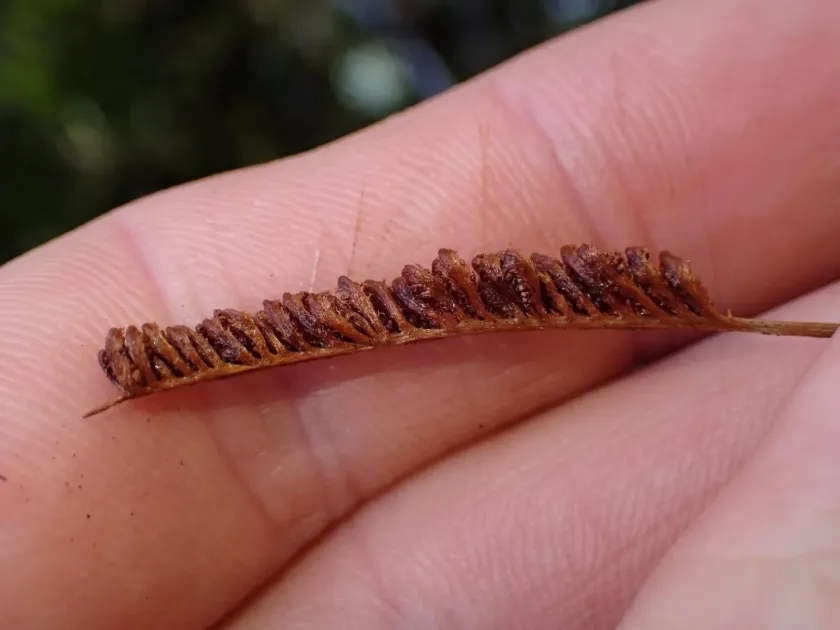
Comb fern (Schizaea fistulosa) is a perennial, spore-bearing plant belonging to the Schizaeaceae family. Unlike typical leafy ferns, this species is characterized by its narrow, reed-like fronds that stand erect, giving it a distinctive grass-like appearance that sets it apart from other members of the Pteridophyta division.
The plant originates from temperate and subtropical regions of the Southern Hemisphere, including Australia, New Zealand, and parts of South America. It is typically found in specialized habitats such as nutrient-poor peat bogs, heathlands, and damp sandy soils, where it thrives despite the acidic environment.
Cultivation of Schizaea fistulosa is exceptionally challenging due to its strict environmental requirements. It demands highly acidic soil, mimicking its native bog conditions, with minimal nutrient content. Proper drainage is essential to prevent root rot while maintaining high levels of constant soil moisture.
Environmental conditions must emphasize a cool to moderate temperature range with high atmospheric humidity. The plant is particularly susceptible to desiccation and heat stress, necessitating protection from direct, intense sunlight and wind exposure. Light should always be diffused and indirect.
Commercially, the comb fern holds no agricultural value and is not utilized as a crop. Its importance is strictly ecological and botanical, as it serves as a subject of study in plant physiology and specialized conservation efforts aimed at preserving rare and fragile bog-dwelling vegetation.
Main diseases and pests
The primary threats to Schizaea fistulosa involve habitat loss, specifically the drainage of wetlands and peat bogs. In greenhouse or research settings, the plant is vulnerable to fungal pathogens if air circulation is insufficient or if the water quality deviates from the necessary acidic pH levels.