
Branched comb fern
Schizaea dichotoma
Description
Growing requirements
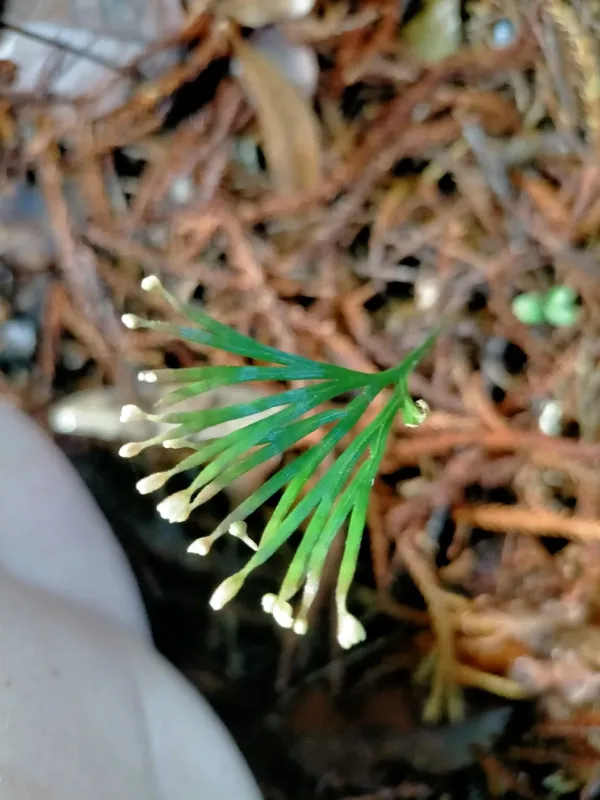
The branched comb fern, scientifically known as Schizaea dichotoma, belongs to the Schizaeaceae family. Unlike common fern species with broad fronds, this plant is characterized by its slender, dichotomously branched fronds that grow in dense, grass-like tufts.
It is native to the tropical and subtropical regions of the Asia-Pacific, including parts of Australia, New Zealand, and Southeast Asia. The plant thrives in diverse environments, from swampy forests to sandy heaths, provided the substrate remains constantly moist.
To cultivate Schizaea dichotoma successfully, one must replicate its natural tropical microclimate. This requires high humidity levels, ideally above 75%, and a stable temperature range between 20°C and 25°C throughout the year, avoiding any sudden drops or spikes.
The growth medium must be highly specific, favoring an acidic, nutrient-poor substrate. A mix consisting of long-fibered sphagnum moss, acidic peat, and silica sand provides the necessary aeration and moisture retention that the root system requires to avoid decay.
Lighting conditions are critical for this species; it requires bright but filtered or diffused light. Direct sunlight is highly detrimental to the plant, causing the thin, delicate fronds to desiccate and change color rapidly, eventually leading to terminal damage.
Main diseases and pests
The most common biological threats to Schizaea dichotoma are pathogens causing root and crown rot, typically exacerbated by stagnant water and poor air circulation. Implementing a rigorous irrigation schedule that allows for slight drying without full dehydration is essential.
Pests such as spider mites and scale insects can quickly colonize the narrow fronds, especially in indoor environments with insufficient air movement. Early intervention using mild, organic-based insecticidal soaps is the recommended approach to minimize stress on the plant.