
Forked comb fern
Schizaea bifida
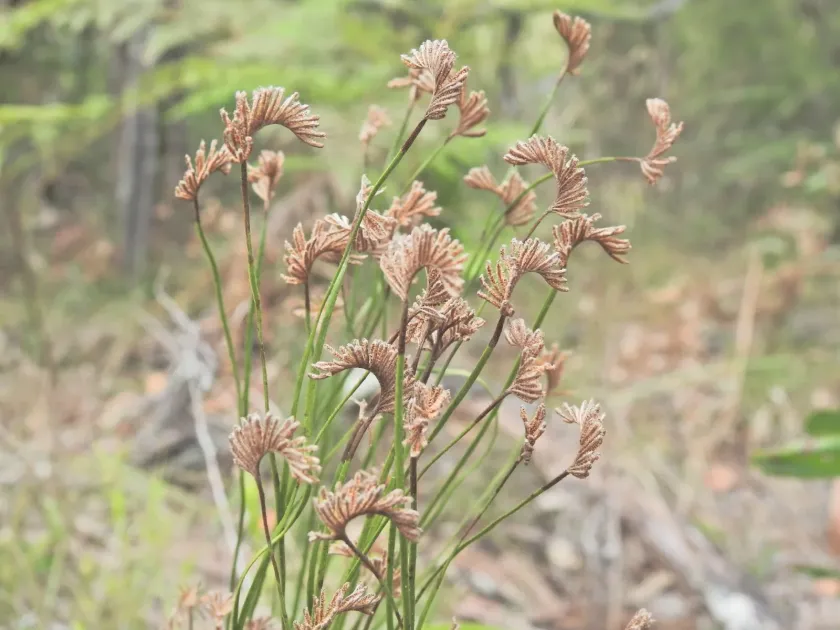
Description
Growing requirements
The forked comb fern (Schizaea bifida) is a unique perennial species belonging to the family Schizaeaceae. It is distinguished by its grass-like appearance, which is quite atypical for traditional fern species found in horticultural trade.
The native distribution area of this species includes parts of Australia, New Zealand, and Southeast Asia. It is typically found in heathlands, woodlands, and moist open areas where the soil is nutrient-poor and acidic.
Botanically, the plant produces slender, erect fronds that fork into two or more segments at the apex. These segments bear sporangia, which are protected by specialized structures, distinguishing them from other fern groups.
Cultivation requirements for this fern are extremely stringent, as it demands a very specific substrate composition. It thrives in well-draining, highly acidic, sandy peat-based media that mimics its natural ecological niche.
The plant requires high levels of relative humidity and stable, moderate temperatures. It is not considered a crop for large-scale agricultural production but is of significant interest to botanical collectors and specialized nurseries.
Main diseases and pests
Root rot is the most common threat to Schizaea bifida. It is typically caused by poor drainage or the use of heavy potting soils that retain moisture for too long, leading to anaerobic conditions in the root zone.
Pests such as spider mites are particularly problematic in indoor environments where the air is too dry. These insects feed on the frond tissues, causing significant physiological stress and weakening the plant's defense mechanisms.
Nutrient toxicity, particularly from high levels of calcium or phosphates, can be fatal. The species is evolved to survive in low-nutrient environments and lacks the mechanism to handle heavy fertilization common in commercial gardening.
Fungal diseases, including leaf spot pathogens, can proliferate if the plant is exposed to poor ventilation or prolonged wetting of the foliage. Proper air movement is essential for maintaining the health of the fronds.
Over-reliance on chemical controls can often do more damage than the pests themselves. Integrated pest management strategies are advised, focusing on physical removal and environmental adjustments to suppress pest populations.