
Schisandra sphenanthera
Schisandra sphenanthera Rehder & E. H. Wilson
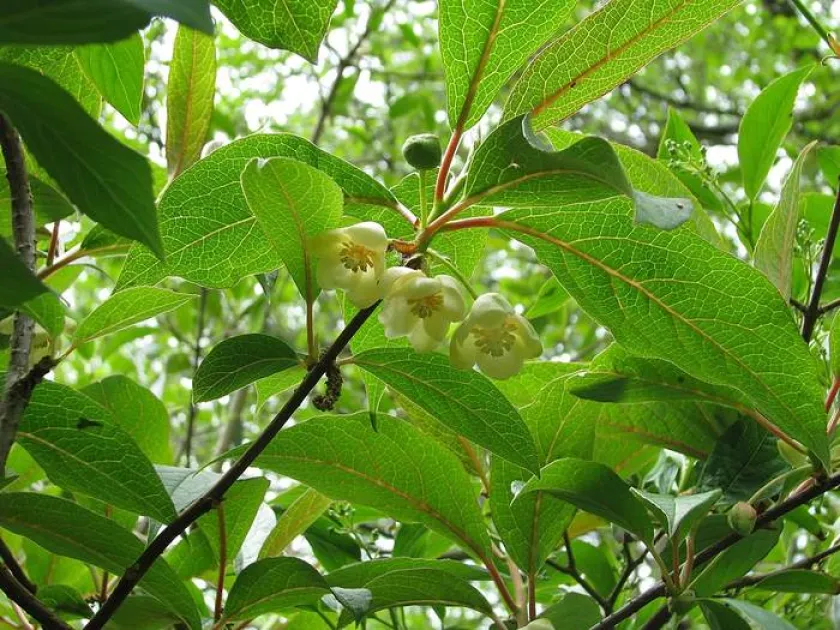
Description
Sowing dates
Sowing Schisandra sphenanthera seeds is typically performed in the autumn to ensure natural stratification in the soil. Spring sowing requires seeds to undergo a multi-stage stratification process under low temperatures for several months to ensure successful germination.
Vegetative propagation is widely considered more efficient for large-scale production. Cuttings are taken in summer from semi-hardened shoots and placed in a greenhouse environment with high humidity to promote root development.
Seedlings are transplanted to their permanent location when they are 2 to 3 years old. The best time for planting is early spring, before the start of active sap flow, or during early autumn, ensuring the plant establishes itself before the first frost.
Given the plant's nature as a climber, trellises are essential for success. Setting up a sturdy support system ensures vertical growth, optimal sunlight exposure for leaves, and easier management of the plant during the growing season.
Planting density is crucial for long-term health. A spacing of about 2.5 to 3 meters between rows is recommended to allow for adequate airflow and to simplify manual labor and potential machine-assisted maintenance.
Growing requirements
Schisandra sphenanthera is a perennial deciduous vine belonging to the Schisandraceae family. It naturally thrives in areas that provide protection from strong winds and intense direct sunlight, typically preferring light shade or semi-shaded environments.
The plant has a high demand for soil and air moisture. Its shallow root system requires consistent hydration; therefore, mulching around the root zone is highly recommended to prevent soil moisture evaporation during hot summer days.
Optimal soils for this culture are loamy or sandy loams that are rich in organic matter and possess excellent drainage. It is important to avoid waterlogged areas, as stagnant water is detrimental to root health and overall plant vigor.
While the vine is relatively hardy, young plants require protection during their first few winters to avoid cold damage. Adapting the plant to specific climate zones is easier when the soil is well-drained and the planting site is sheltered.
Regular fertilization is key to growth. Applying organic compost or manure during spring soil preparation enhances soil structure, providing the essential nutrients needed for the vine to expand its canopy and produce fruit in subsequent years.
Yield
The first harvest usually occurs 4 to 6 years after transplanting. The plants need time to establish a strong structural framework on the trellises before they can focus energy on consistent berry production.
Peak yields are generally achieved when the vines are between 10 and 12 years old. During this phase, proper pruning and canopy management are vital to ensure that nutrients are directed toward the fruit-bearing branches.
The fruits develop in raceme-like clusters of red berries. These berries possess a distinct aromatic quality and are valued for their high concentrations of bioactive compounds, which are popular in health and supplement industries.
Consistent irrigation and the application of phosphorus and potassium fertilizers during the flowering and fruit-setting stages significantly improve yield quality. These nutrients are essential for the sugar accumulation and size development of the berries.
Annual sanitary pruning is required to prevent canopy overcrowding. Removing old, unproductive, or damaged branches ensures better light penetration and airflow, which are critical for increasing the total mass of the harvested crop.
Main diseases and pests
Common diseases affecting this species include powdery mildew and leaf spot, which are frequently triggered by high humidity levels. Management involves using fungicides and ensuring proper spacing between vines to improve ventilation.
Pests such as scale insects and leaf-rollers can cause significant damage by feeding on foliage and stems. Regular monitoring of the underside of leaves is necessary to catch infestations early and prevent them from spreading across the plantation.
Root rot is a potential risk when soil aeration is poor or irrigation is excessive. Maintaining loose, well-drained soil structure prevents the formation of crusts and ensures the root system receives sufficient oxygen.
Birds often pose a threat to ripening fruits. To protect the harvest, growers frequently employ fine-mesh netting over the trellises, which effectively deters birds while allowing the berries to ripen fully without interference.
Integrated pest management strategies are encouraged, combining cultural practices like regular cleaning of the site with targeted biological or chemical treatments to maintain a healthy plantation and high-quality raw material production.
Harvesting
Harvesting begins in late summer and continues through autumn, depending on local climate conditions. The berries are ready for picking when they reach their characteristic bright red color and full aromatic intensity.
Harvesting should be done carefully with sharp shears to clip the clusters without damaging the fruiting buds for the following year. It is important to harvest entire clusters to preserve the berries' physical integrity.
After picking, berries should be kept out of direct sunlight and transported to a processing facility quickly. Due to their high moisture content, they are susceptible to rapid deterioration if left at room temperature for extended periods.
Modern processing often involves controlled-temperature drying. This technique helps preserve heat-sensitive compounds like schizandrin, ensuring the final dried product retains its medicinal properties and commercial value.
The economic value of Schisandra sphenanthera lies in its adaptogenic properties. Efficient harvesting and strict quality control ensure that the raw material meets industrial standards for the pharmaceutical and nutraceutical markets.