
Scaphium longiflorum
Scaphium longiflorum
Description
Growing requirements
Scaphium longiflorum is a tropical tree species belonging to the Malvaceae family, native to the diverse rainforests of Southeast Asia, where it thrives in specific ecological niches.
The tree demands a tropical climate characterized by consistently high temperatures and significant annual rainfall to maintain its metabolic activities and growth rates.
Cultivation requires deep, fertile, and well-drained soils, ideally rich in humus, which mimic the natural floor conditions of its native tropical habitat.
Regarding agricultural practices, young trees require consistent moisture and protection from intense direct sunlight, typically achieved through intercropping or agroforestry systems.
Adequate space is necessary for mature trees, as they develop large canopies that require significant airflow to prevent the development of fungal pathogens during the rainy season.
Harvesting
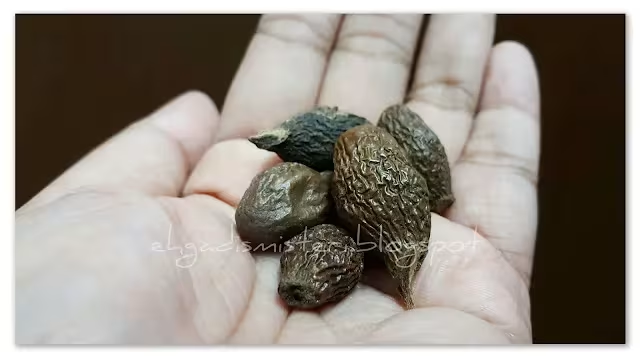
The harvesting of Scaphium longiflorum focuses primarily on its seeds, which are highly valued for their mucilaginous properties used in traditional medicine and health supplements.
Technicians monitor the fruit maturity carefully, ensuring that the harvesting stage is reached when the seeds have attained their peak nutritional and chemical potency.
Harvesting techniques involve climbing or the use of extended reach tools to collect fruits from the higher branches without damaging the tree's bark or structural integrity.
Post-harvest processing involves separating the seeds from the fruit pods followed by a controlled drying phase to reduce the moisture content for long-term preservation.
Quality control at the harvest stage ensures that only sound, disease-free seeds are processed, thereby maintaining the high standards required for export and medicinal application.