
Salacia crassifolia
Salacia crassifolia
Description
Growing requirements
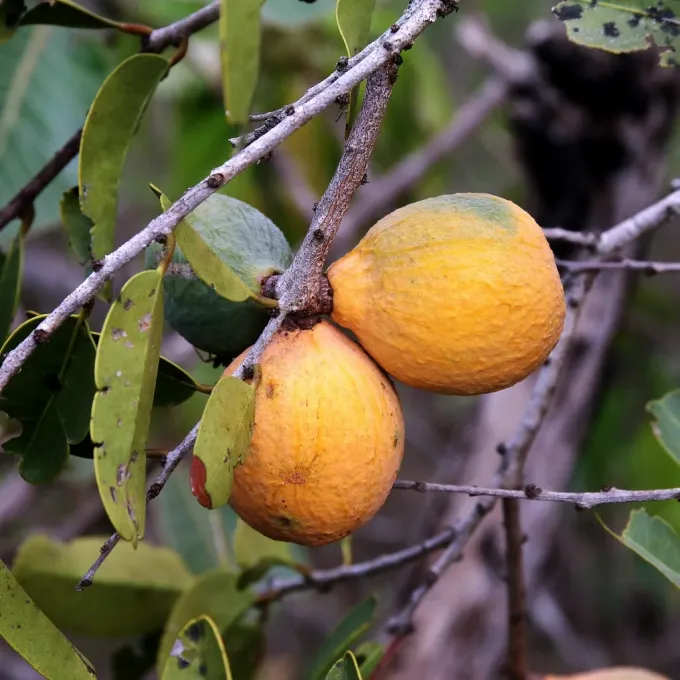
Salacia crassifolia, commonly known in its native Brazil as bacupari-do-cerrado, is an woody perennial plant belonging to the Celastraceae family. It is naturally adapted to the savanna biomes (Cerrado), characterized by distinct wet and dry seasonal patterns.
The plant thrives in well-drained, acidic soils typical of its native environment. It shows remarkable tolerance for low-fertility soils, making it an excellent candidate for the agricultural development of lands that are often considered unsuitable for more demanding crops.
Full sun exposure is crucial for the optimal development of this species. In shaded areas, the plant tends to become spindly, and its photosynthetic capacity, as well as overall reproductive output, is significantly reduced.
A key botanical feature is its thick, coriaceous leaves. This specialized anatomy is an evolutionary adaptation designed to minimize transpiration, allowing the plant to maintain its physiological function despite the intense heat and periodic drought stress.
The root system is robust, designed to explore deep soil profiles to reach moisture. In an agricultural setting, it is essential to ensure that planting sites have adequate aeration, as the species is sensitive to waterlogged conditions that can inhibit root respiration.
Yield
Yield capacity is influenced by environmental conditions and the availability of cross-pollination. Mature plants can produce a significant amount of berry-like fruits, which are highly regarded for their juicy and sweet-tasting flesh.
The fruits are increasingly recognized for their commercial value, being processed into juices, jellies, and jams. Their unique chemical composition also makes them an subject of interest for the functional food and nutraceutical industries.
Harvesting usually involves manual collection of mature fruits when they reach their characteristic orange-yellow color. Because of the delicate nature of the pulp, careful handling is required to maintain quality from the field to the consumer.
Ongoing research aims to select high-yielding genotypes that can produce consistent crops annually. Improving irrigation during the critical fruit-set phase can substantially increase the final output per hectare.
As market demand for exotic, healthy fruits grows globally, the cultivation of this species offers high economic potential for small and medium-sized farms focusing on diversified tropical fruit production.
Main diseases and pests
The primary threats to Salacia crassifolia plantations are fungal infections, which are often exacerbated by poor air circulation within the canopy. Pruning strategies should emphasize maintaining a structure that allows for good light and air penetration.
Insect pests, including various beetles and lepidopteran larvae, can affect foliage health and fruit quality. Integrated Pest Management (IPM) is strongly recommended to maintain a balance between productivity and ecological sustainability.
Root pathogens can pose a risk if drainage systems are inadequate. Avoiding over-irrigation and ensuring the soil structure promotes rapid water runoff are the best preventive measures for soil-borne diseases.
Sanitation within the plantation is essential; removing dropped fruits and diseased plant debris prevents the buildup of pathogens. This practice keeps the orchard environment clean and significantly lowers the infection pressure.
Overall, the plant is relatively resilient to standard agricultural stressors, provided that the basic requirements for drainage and light are met. Strategic management practices effectively minimize the risks associated with commercial production.