
Rourea surinamensis
Rourea surinamensis
Description
Growing requirements
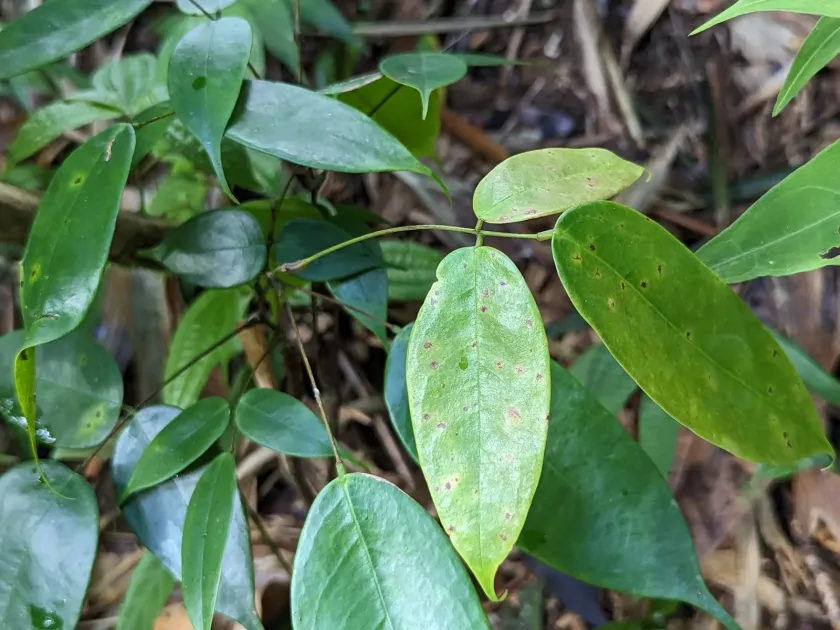
Rourea surinamensis is a woody vine species belonging to the family Connaraceae. It is native to the tropical ecosystems of South America, particularly within the Suriname region and the Amazon basin. As a liana, it thrives in dense forest habitats where it competes for canopy light, exhibiting significant structural adaptations.
The climatic requirements for this species are strictly tropical, demanding high humidity levels throughout the year and temperatures that do not drop below the thermal threshold for tropical flora. Frost tolerance is non-existent, making it exclusively a candidate for tropical climates or climate-controlled environments like large botanical conservatories.
Regarding soil conditions, the plant prefers well-draining, nutrient-rich substrates with a moderate acidic pH, mimicking the tropical forest floors where it naturally occurs. In cultivation, it is essential to ensure that the potting medium remains consistently moist but never waterlogged to maintain healthy root respiration.
Cultivation practices involve providing robust vertical supports to accommodate its climbing habit. Pruning is often necessary to manage the vigorous growth and to improve the exposure of foliage to filtered light. Propagation is typically achieved through seeds or stem cuttings conducted in high-humidity propagation chambers to ensure success.
From a utilization perspective, Rourea surinamensis is primarily appreciated for its botanical interest and role in local ecosystems. While it is not a major commodity crop, it serves as a subject for scientific research regarding tropical vine biology and is occasionally cultivated by enthusiasts of exotic flora for educational purposes.