
Dichelostemma multiflorum
Dichelostemma multiflorum (Benth.) A. Heller
Description
Growing requirements
Dichelostemma multiflorum is a bulbous herbaceous perennial belonging to the family Asparagaceae. Native to the mountainous regions of California and Oregon, this plant is well-adapted to Mediterranean-type climates with cool, wet winters and warm, dry summers.
The plant thrives in well-draining, gritty, or sandy soils. It is critical to ensure that the soil does not retain excessive moisture during the dormant period, as the bulbs are highly susceptible to rot if kept wet in warm temperatures.
Regarding light exposure, the species prefers full sun to light shade. In regions with intense afternoon heat, providing some dappled shade during the hottest part of the day can help prolong the flowering period of the inflorescence.
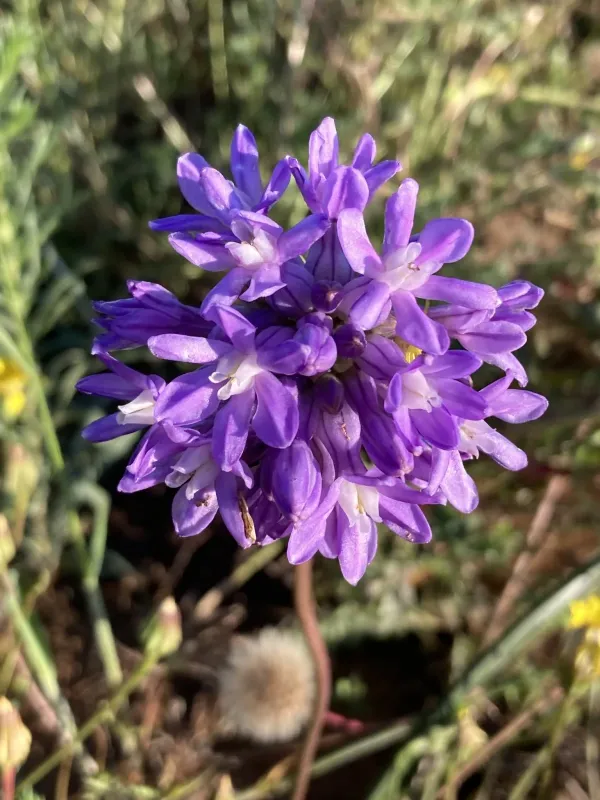
The species features distinctive, round, umbel-like inflorescences packed with numerous violet-blue, bell-shaped flowers. The stems are robust and can reach heights of nearly a meter, making them suitable for naturalistic landscape plantings.
Cultivation requires minimal intervention once established, provided the environmental conditions match the native habitat. The plant goes dormant after flowering, during which time the foliage withers and disappears entirely until the next growing season.
Main diseases and pests
The most significant threat to Dichelostemma multiflorum is fungal root rot, which occurs in poorly drained soils or during unseasonably wet summers. This pathogen leads to the rapid collapse of the bulb, especially when temperatures remain high.
Garden pests such as snails and slugs can cause severe damage to emerging foliage in early spring. Regular monitoring and the application of physical barriers or organic baits are standard practices for mitigation.
Bulb-feeding insects, including certain larvae of soil-dwelling beetles, pose a risk to the underground structures. It is recommended to check the health of dormant bulbs if replanting or dividing the clumps.
Rodents such as voles and gophers are known to consume the nutritious bulbs. Planting in wire baskets or protected containers is often necessary if these animals are prevalent in the gardening area.
While generally resistant to most common garden viruses, stress from improper watering can weaken the plant, making it more vulnerable to opportunistic pathogens or secondary infestations.