
Dichelostemma venustum
Dichelostemma x venustum (Greene) Hoover
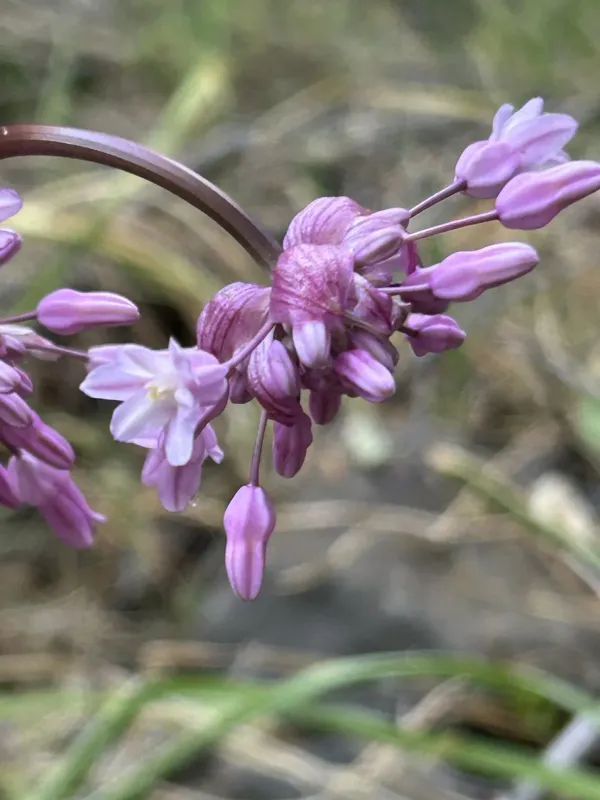
Description
Growing requirements
Dichelostemma venustum is a bulbous perennial plant belonging to the Asparagaceae family. Native to western North America, it naturally thrives in open slopes and woodlands, adapting to climates with distinct dry summer seasons.
Successful cultivation requires well-draining, sandy, or rocky soil. The plant is highly sensitive to waterlogged conditions, particularly during the dormant phase, which makes drainage the most critical factor in choosing a planting site.
The species prefers full sun exposure to semi-shaded conditions. In garden settings, it performs best when placed in spots where it can receive enough light to fuel the growth of its linear leaves and characteristic tubular pink-to-purple flower clusters.
Botanically, it is distinguished by a tall, leafless scape topped with a cluster of vibrant, bell-shaped flowers. The plant is valued for its unique appearance, which provides early spring beauty in temperate gardens and rockeries.
For agricultural and horticultural purposes, it is grown primarily as an ornamental plant. Its resilience in dry-summer climates makes it a great choice for xeriscaping or sustainable landscaping projects in suitable geographic zones.
Main diseases and pests
Fungal diseases are the primary threat, especially root rot caused by stagnant moisture. To mitigate this risk, it is essential to ensure that the soil remains relatively dry during the plant's summer dormancy.
Pests such as bulb mites can significantly reduce plant vigor by feeding on the storage organs. Maintaining strict sanitation of tools and using only clean, disease-free bulbs for propagation is a standard practice.
Aphids often target the developing flower buds, leading to stunted growth or deformed blooms. Integrated pest management strategies should be employed to reduce aphid populations before they cause significant damage.
Slugs and snails can consume young foliage during wet spring conditions. Regular monitoring of the garden bed and the use of physical barriers are effective ways to protect the delicate early growth of the plant.
Viral infections may occur, often transmitted by insect vectors. Once infected, there is no curative treatment, so removing and disposing of diseased plants is the only effective way to prevent the spread to healthy individuals.