
Dichelostemma ida-maia
Dichelostemma ida-maia (Alph. Wood) Greene
Description
Growing requirements
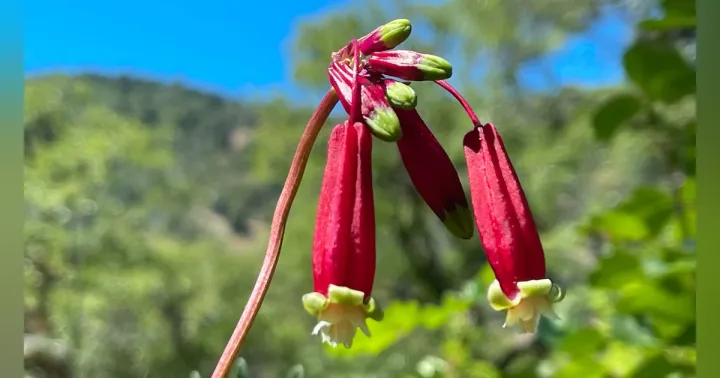
Dichelostemma ida-maia is a distinctive bulbous plant belonging to the Asparagaceae family. Native to the western regions of North America, particularly California and Oregon, it is known for its elegant, tube-shaped flowers that mimic the appearance of firecrackers.
The botanical structure consists of a basal rosette of leaves and a tall, slender scape bearing clusters of vibrant red flowers with green or white tips. This appearance makes it a popular subject for specialized botanical collections and ornamental gardening.
This species requires full sun to partial shade for optimal flowering. It thrives in regions with Mediterranean-like climates, where it benefits from wet winters and dry summers, which are critical for its dormancy cycle.
The soil must be well-draining and slightly acidic to neutral. Heavy, waterlogged soils are the primary cause of failure, as the bulbs are susceptible to rotting when moisture levels are uncontrolled during their dormant period.
In landscape use, Dichelostemma ida-maia is best utilized in rock gardens or as an exotic component in mixed borders. Its nectar-rich flowers are highly attractive to hummingbirds and pollinators, contributing to biodiversity in the garden.
Main diseases and pests
The most significant threats to this culture are root-rotting fungi, specifically Pythium and Phytophthora, which proliferate in damp or poorly drained substrates. These pathogens target the bulb directly, causing irreversible damage.
Pests such as mites and nematodes can infest the bulbs, weakening the plant's overall vigor. In certain environments, slugs and snails pose a threat to the tender, emerging foliage during the spring growth phase.
Effective management includes maintaining a rigorous drainage regime and ensuring adequate space between plants to allow for airflow. Avoiding overhead watering can reduce the risk of secondary infections on foliage.
Regular inspection of bulbs during storage or before planting is recommended to ensure no signs of rot or pest activity are present. Applying appropriate systemic fungicides as a preventative measure can offer additional protection.
For regions with harsh, wet winters, it is advisable to lift the bulbs after the foliage fades and store them in a cool, dry environment. This practice replicates their natural habitat requirements and prevents winter damage.