
Rotheca serrata
Rotheca serrata
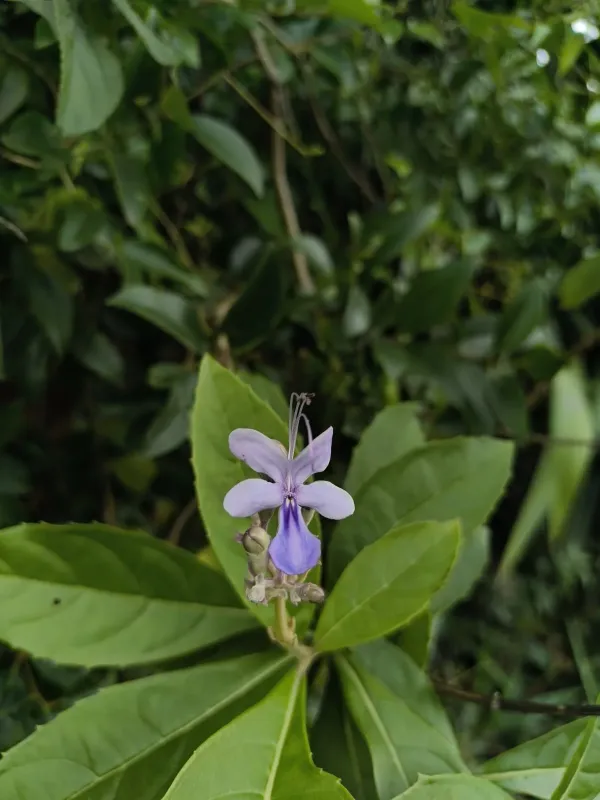
Description
Growing requirements
Rotheca serrata is a perennial shrub belonging to the Lamiaceae family. In the wild, this plant is most commonly found in regions of South and Southeast Asia, including India, Sri Lanka, and Malaysia, where it thrives in moist tropical forests and open areas with sufficient sunlight exposure.
The plant grows as a shrub reaching heights between one and two meters, featuring characteristic opposite leaves with finely serrated edges, which gives the species its specific botanical name. The flowers of the Rotheca are arranged in striking terminal inflorescences, displaying colors from pale blue to deep blue-violet, which adds significant ornamental value.
Successful cultivation of this species requires well-drained, fertile soils with a neutral or slightly acidic pH level. The plant is extremely sensitive to waterlogging in the root zone, therefore, in areas with heavy clay soils, it is necessary to provide raised planting beds or a high-quality drainage layer to ensure plant health.
This crop is thermophilic; the optimal temperature range for active vegetative growth is between 22 and 30 degrees Celsius. Rotheca does not tolerate sudden temperature fluctuations well and requires protection from direct cold winds, which limits its commercial cultivation primarily to tropical climatic zones.
The economic use of Rotheca serrata is focused on the pharmacological sector and traditional medicine. In various South Asian countries, the roots and leaves of the plant are used in the production of preparations with anti-inflammatory and antipyretic properties, making it a promising crop for specialized plantations of medicinal raw materials.
Main diseases and pests
The main threats to the crop in plantation settings are fungal diseases that develop due to high air and soil humidity. Among these, the most dangerous are root rots and powdery mildew, which can lead to the rapid degradation of plantings if the irrigation schedule is improperly managed.
Regarding pests, the greatest damage is caused by sap-sucking insects, particularly spider mites and various aphid species, which attack young shoots and leaves. For effective control, agricultural practices recommend the use of biological control agents or timely application of systemic insecticides.