
Rotheca myricoides
Rotheca myricoides
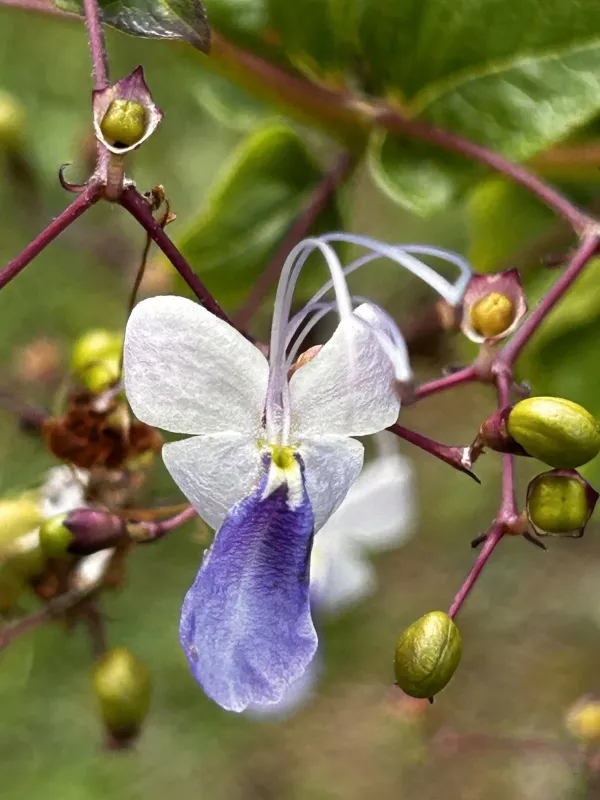
Description
Growing requirements
Rotheca myricoides, formerly classified under the genus Clerodendrum, belongs to the Lamiaceae family. Native to tropical Africa, this species is highly valued in horticulture for its distinctive flowers, which resemble small blue butterflies.
The plant thrives in warm, humid conditions and is strictly frost-tender. In non-tropical regions, it is cultivated in greenhouses or as a houseplant, requiring a controlled environment where temperatures do not drop below 15°C.
Cultural success depends on well-draining, nutrient-rich soil. A potting mix consisting of composted organic matter and perlite is recommended to balance moisture retention with necessary aeration for the root system.
Bright, indirect light is essential for robust growth and frequent flowering. While the plant can tolerate some filtered morning sun, intense midday direct light can scorch the foliage and should be avoided or diffused.
Maintenance involves routine pruning to maintain shape and promote a bushy habit. By pruning back long, leggy stems after the blooming period, the grower encourages the production of new growth, which leads to a more abundant floral display.
Main diseases and pests
Spider mites are the most common pests associated with this crop, particularly in low-humidity environments. Regularly misting the plant and using specialized acaricides help to manage these infestations effectively.
Root rot represents the primary pathological threat, typically induced by overwatering. It is critical to allow the top layer of soil to dry out between watering sessions to ensure the root zone remains healthy and oxygenated.
Whiteflies can infest the undersides of leaves, causing yellowing and stunted growth. Implementing integrated pest management, such as the use of yellow sticky traps and neem oil, can keep populations under control without harsh chemicals.
Fungal infections, including powdery mildew, may occur if airflow is poor and the foliage stays constantly damp. Maintaining proper spacing and improving ventilation are key cultural practices to prevent the development of these pathogens.
Consistent monitoring and early detection of pest symptoms are vital for plant health. Providing proper nutrition through balanced liquid fertilizers during the active growing season increases the plant's overall resilience against various environmental stresses.