
Rinorea oblongifolia
Rinorea oblongifolia
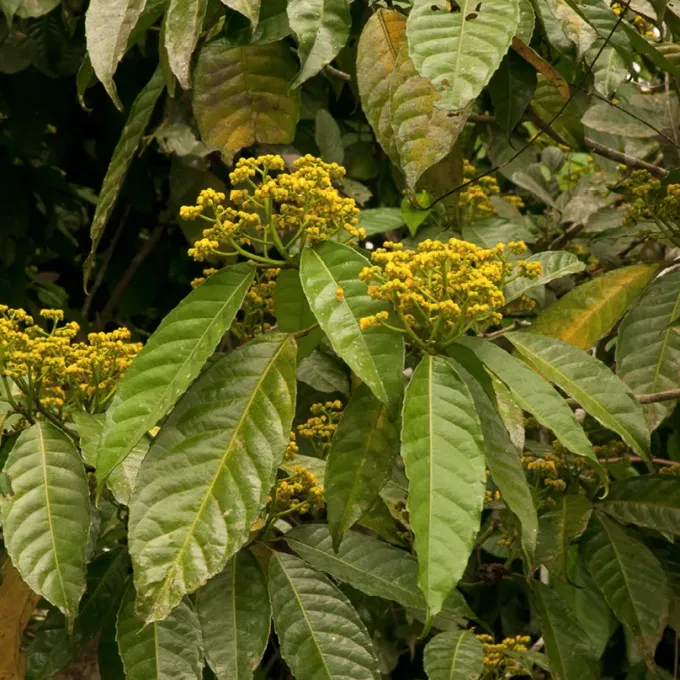
Description
Growing requirements
Rinorea oblongifolia is a woody tropical plant species belonging to the Violaceae family. It is native to the tropical regions of Africa, where it thrives in the understory of dense, humid rainforests, benefiting from the stable microclimate of the forest floor.
The crop requires a tropical climate with high humidity levels and consistent temperatures. To achieve optimal growth rates, producers must simulate these conditions by maintaining air moisture and soil warmth throughout the entire growing cycle.
Soil requirements for Rinorea oblongifolia are quite specific: it prefers nutrient-rich, organic-heavy, and well-draining substrates. Waterlogging can be detrimental to root development, making drainage management a top priority for agronomists.
Regarding light, this plant is categorized as shade-tolerant. High-intensity direct sunlight can cause leaf chlorosis and damage. Providing 60-70% shade coverage is typically recommended to keep the foliage healthy and foster vigorous development.
Strategic management of nutrient availability is essential. Regular applications of organic fertilizers rich in micronutrients support the plant's structural integrity, as it is naturally slow-growing and requires steady nutritional input to reach maturity.
Yield
The economic value of Rinorea oblongifolia is primarily centered on its potential in phytochemistry. The yield, in an agricultural context, is measured by the biomass quantity suitable for processing into pharmaceutical or cosmetic extracts.
While large-scale industrial harvesting is still in the research phase, initial observations suggest that high-density planting in controlled greenhouse environments can optimize the concentration of active chemical compounds in the leaves.
Productivity hinges on the age of the shrubs and the frequency of pruning. Systematic harvesting of lateral shoots can stimulate the development of new foliage, thereby increasing the total seasonal output of raw material.
Quality control remains a critical aspect of yield management. Because the plant is often harvested for its medicinal properties, ensuring that the biomass is free from contaminants and standardized in terms of secondary metabolites is vital for marketability.
Sustainable cultivation practices, including the use of mycorrhizal fungi to enhance nutrient uptake, show promise in significantly boosting biomass production efficiency and overall plantation longevity.