
Rinorea convallarioides
Rinorea convallarioides
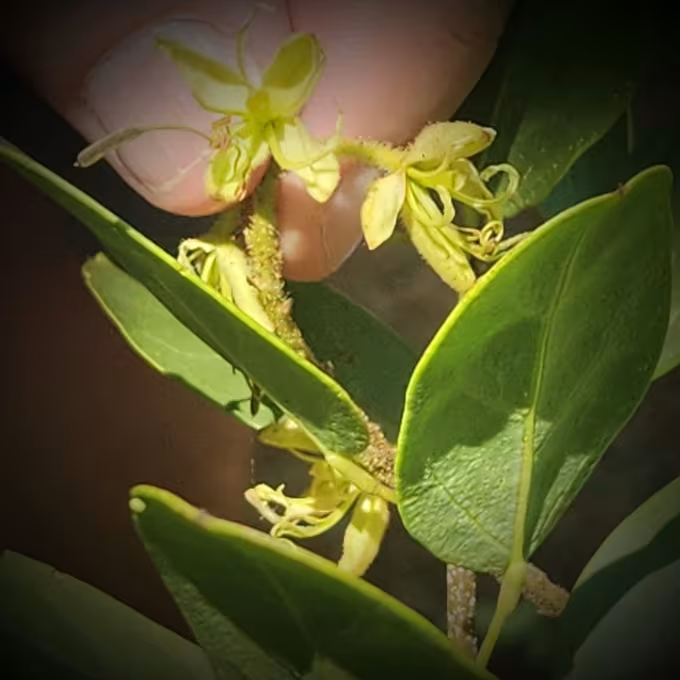
Description
Growing requirements
Rinorea convallarioides is a member of the Violaceae family, primarily native to the humid tropical forests of Central and Western Africa. As a typical forest understory species, it has evolved to thrive under a dense canopy with filtered sunlight.
The plant requires deep, well-draining soils that are rich in organic matter. Maintaining the soil's moisture level is crucial, as the species is adapted to habitats where precipitation is abundant throughout the year and long droughts are absent.
Climatic requirements demand temperatures between 20°C and 30°C. Since it originates from the tropical belt, the plant possesses no natural resistance to cold weather, making it strictly a tropical or greenhouse crop in other latitudes.
Humidity levels should remain consistently high, typically above 65-70%. Low air humidity can cause significant stress, leading to dehydration of the leaf edges and a sharp decline in photosynthetic efficiency.
In terms of agricultural management, the plant requires protection from intense midday heat and strong winds, which can rapidly dry out the foliage and cause structural damage to the stems.
Main diseases and pests
Root rot is the most common threat encountered when cultivating Rinorea convallarioides, primarily caused by waterlogged soils or improper drainage systems in greenhouse conditions.
Pests such as spider mites and mealybugs often attack the plant in enclosed spaces where natural predators are absent, requiring careful monitoring and integrated pest management strategies.
Fungal infections of the foliage can occur if there is insufficient air movement. Proper spacing between individual plants is necessary to promote healthy airflow and prevent disease spread.
Nutrient deficiencies, particularly regarding nitrogen and trace elements, can manifest as chlorosis if the soil substrate is depleted, requiring precise fertilization programs.
Consistent observation of the leaf canopy is recommended to detect any early signs of pest activity, ensuring that interventions are applied before the infestation spreads across the entire crop.