
Rindera umbellata
Rindera umbellata
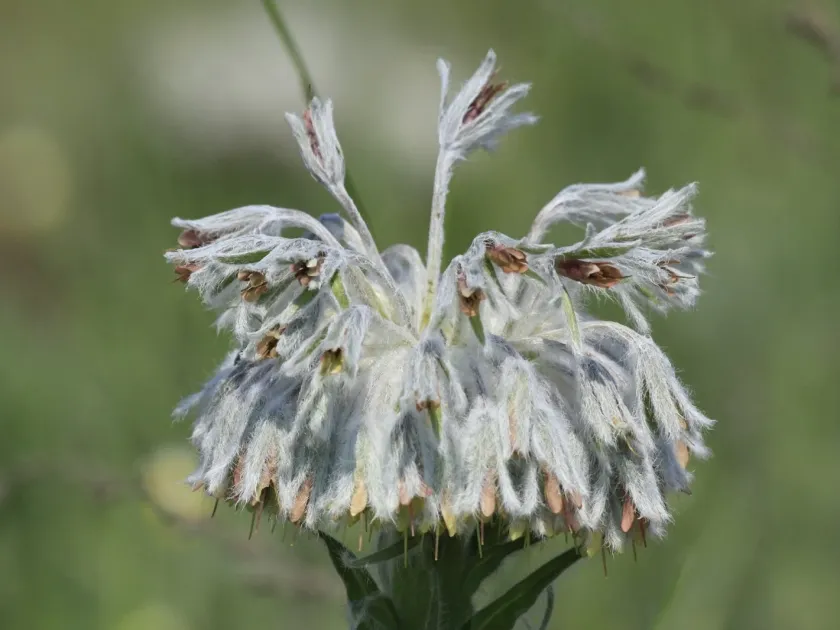
Description
Sowing dates
Rindera umbellata, a member of the Boraginaceae family, is a perennial herb well-adapted to arid environments. In agricultural practice, seeds should be sown in late autumn to ensure they undergo the necessary stratification period during winter, which is crucial for optimal germination in spring.
If spring sowing is preferred, the seeds must undergo pre-chilling or stratification for several weeks before being placed in the soil. Proper preparation leads to more uniform seedling emergence once the soil temperatures stabilize.
Seeds are typically sown at a depth of 1 to 2 centimeters. Ensuring consistent moisture during the germination phase is vital, but growers must avoid waterlogging, as excessive moisture can quickly lead to seed rot in this drought-adapted species.
For field cultivation, row spacing should be maintained at 45–60 centimeters. This provides sufficient space for root development and facilitates mechanical weed control, which is essential during the initial growth phase of the crop.
Using fresh, high-viability seeds is recommended, as the germination percentage of Rindera umbellata tends to decline if seeds are stored for more than three seasons.
Growing requirements
This plant is a true xerophyte, thriving in sunny, open locations with well-drained, sandy, or rocky soils. High soil permeability is essential; heavy clay soils should be avoided or amended with sand to prevent root crown rot.
The ideal pH range for this crop is neutral to slightly alkaline. The plant is well-adapted to continental climates characterized by hot, dry summers, and it possesses excellent cold hardiness, making it suitable for temperate regions.
Soil fertility requirements are modest. Over-fertilization, particularly with nitrogen, is counterproductive as it leads to excessive vegetative growth at the expense of secondary metabolites and overall stress tolerance.
The deep-reaching taproot allows the plant to access moisture in deep soil layers, making it a sustainable choice for areas where irrigation is limited. Potassium and phosphorus applications in early spring are usually sufficient to support growth.
Field selection should prioritize sites with natural drainage and good air circulation, avoiding low-lying areas where cold air or excess moisture might accumulate during the early spring thawing period.
Yield
The primary agricultural output of Rindera umbellata is its above-ground biomass, harvested during the peak flowering stage when the concentration of desirable biochemical compounds is at its highest.
Yield depends heavily on stand density and the age of the plantation. Under optimal conditions, growers can expect substantial dry weight yields per hectare, making it a viable crop for marginal or dry lands.
In addition to foliage, seed production is a secondary revenue stream. Because seeds mature gradually within the umbellate inflorescences, harvesting often requires careful timing or multiple passes to maximize yield.
The perennial nature of the crop ensures that, once established, a plantation can remain productive for 5–7 years, significantly reducing the annual costs associated with soil preparation and sowing.
Quality control during drying is essential for market acceptance. Proper moisture management during the drying phase prevents degradation of the plant's valuable properties and ensures long-term shelf stability.
Main diseases and pests
Fungal root pathogens are the most significant threat, especially in soils that lack adequate drainage. Preventing root rot is the primary management goal, achieved through careful site selection and soil texture optimization.
Soil-dwelling insects, particularly wireworms, may attack the taproots of young plants. Integrated pest management strategies should focus on pre-planting soil treatments to ensure a healthy start for the plantation.
Aphids can cause issues during the flowering stage by clustering on the tender buds. Regular field monitoring is required to determine if economic thresholds are met before initiating any control measures.
Weed competition is most severe during the first year of establishment. Mechanical cultivation of inter-rows is recommended until the crop's canopy is sufficiently dense to shade out competitors.
Adhering to a proper crop rotation schedule is vital to prevent the build-up of specific soil-borne pathogens. A minimum gap of four years between Rindera plantings on the same plot is advised.
Harvesting
Harvesting is performed using mechanical cutters during the onset of the flowering period. The cutting height should be adjusted to avoid damaging the crown, ensuring the plant remains healthy for regrowth in subsequent seasons.
Seed harvesting can be mechanized using adapted combine harvesters. Since maturity is not uniform, post-harvest drying of the seed heads in a controlled environment is often necessary to complete the maturation process.
The harvested biomass must be processed in well-ventilated drying facilities. Keeping temperatures below 45 degrees Celsius is critical to preserving the integrity of the bioactive compounds found in the tissue.
Cleaned and sorted material should be stored in moisture-proof containers within a climate-controlled environment to protect the product from humidity and storage pests throughout the off-season.
Ongoing maintenance, including soil aeration and targeted mineral supplementation, ensures the plantation remains vibrant and maintains consistent production levels throughout its multi-year life cycle.