
Rhynchocorys stricta
Rhynchocorys stricta
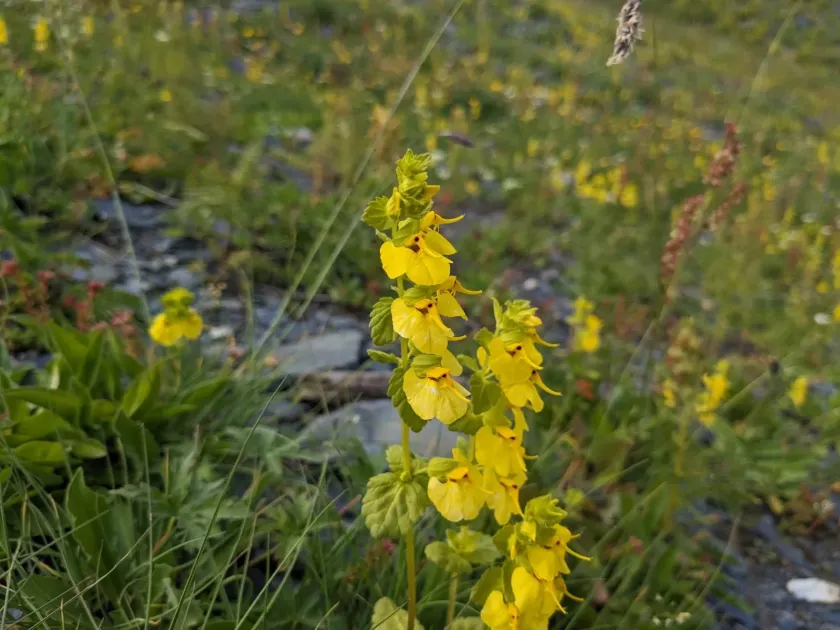
Description
Growing requirements
Rhynchocorys stricta is a herbaceous plant belonging to the Scrophulariaceae family. It is recognized for its unique biological profile as a hemiparasitic plant, which is commonly found in mountain meadows and moist landscapes.
The morphology of this plant features a straight stem and yellow flowers arranged in dense spikes. These flowers are highly adapted for insect pollination, making the species an essential component of local insect-plant interactions.
Regarding soil requirements, it thrives in well-drained, nutrient-rich soils. It does not tolerate waterlogging, which often leads to root respiration issues and subsequent fungal infections in the root zone.
Climate conditions are critical for its development; the species prefers cool, temperate environments. It is well-suited to mountain climates where mild summers and consistent moisture levels prevail throughout the growing season.
Agricultural management for this species is minimal as it is usually observed in natural pasturelands. Understanding its growth cycles is important for those managing wild meadows and conserving plant biodiversity.
Main diseases and pests
Major threats to the population include fungal pathogens that thrive in high-humidity conditions. These pathogens can cause root rot or stem decay, particularly during seasons with excessive rainfall.
Insects, such as aphids and specific beetle species, often target the inflorescences. This herbivory can lead to a decrease in seed production, limiting the potential for population regeneration in the following years.
Competition from invasive weeds is a significant concern. In areas where soil fertility is altered, faster-growing species can easily outcompete Rhynchocorys stricta, leading to its local extinction.
Overgrazing by livestock is another primary threat. Since the plant relies on seed dispersal for propagation, continuous removal of the flowering tops significantly hinders its long-term survival.
Climatic stress caused by unseasonable heatwaves can cause the plant to wither prematurely. Adequate monitoring is necessary to ensure that environmental conditions remain within the range of the plant's tolerance.