
Rhynchocorys orientalis
Rhynchocorys orientalis
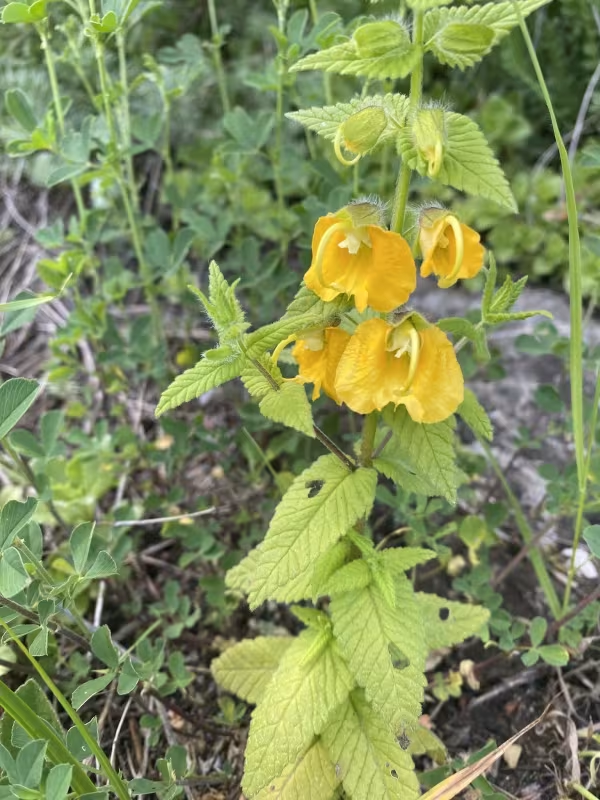
Description
Sowing dates
Rhynchocorys orientalis belongs to the Orobanchaceae family and is known for its hemi-parasitic lifestyle. It is not traditionally cultivated as an agricultural crop but is studied for its unique botanical and ecological roles within its native ecosystems.
The lifecycle begins in early spring, as seeds germinate in response to soil warming and the activation of host plants in the vicinity. The connection to the host roots is established shortly after emergence to support further growth.
Successful development of this plant depends heavily on the presence of specific host plant species. Without a suitable host, the plant cannot complete its nutritional requirements for flowering and seed set.
Propagation is strictly through seeds collected after the capsules reach maturity. These seeds typically require a cold stratification period to break dormancy before they are able to germinate successfully under favorable conditions.
Agronomic management for this species is limited to botanical conservation. Cultivation efforts are extremely rare and require mimicking natural conditions, including the proximity of suitable host plants in a stable environment.
Growing requirements
The plant thrives in moist, well-drained soil environments. It is frequently observed in meadows, riverbanks, and mountainous regions, where the soil moisture remains consistent throughout the spring season.
Ample sunlight is essential for optimal growth, although the plant can tolerate light shade. Exposure to direct sunlight is crucial to drive photosynthesis, which complements the nutrients derived from the host plant.
A mild temperature regime is required, specifically avoiding late spring frosts that can damage tender seedlings. Consistent temperatures support the development of vegetative biomass and improve the survival rate.
Soil quality should be relatively high in organic matter to support the host plants. The pH level of the soil should be neutral to slightly acidic, which is characteristic of the native habitats where Rhynchocorys orientalis occurs.
Effective interaction with the host root system requires a stable soil structure. Disturbance to the soil or removal of the top layer can disrupt the critical root-to-root contact necessary for the hemi-parasitic plant to survive.
Main diseases and pests
Anthropogenic disturbances, particularly intensive grazing by livestock, pose a major threat to its populations. Such activities damage both the plant and its hosts, leading to a decline in local plant diversity.
Root-borne pathogens that affect the host plants also have a devastating effect on the parasite. When the host plant is weakened by disease, the supply of nutrients is severed, resulting in the rapid decline of Rhynchocorys orientalis.
Herbivorous insects can cause significant damage to foliage. While the plant possesses some chemical defenses, extensive herbivory reduces its overall vigor and limits the amount of energy available for seed production.
Invasive weed species compete aggressively for resources and space. This competition often leads to the displacement of Rhynchocorys orientalis, as it cannot compete for sunlight and soil nutrients when surrounded by dominant weed species.
Habitat loss due to changes in hydrological patterns is a critical threat. The drainage of wetlands or changes in local water tables can make it impossible for the plant to persist in previously stable habitats.