
Rhombophyllum rhomboideum
Rhombophyllum rhomboideum
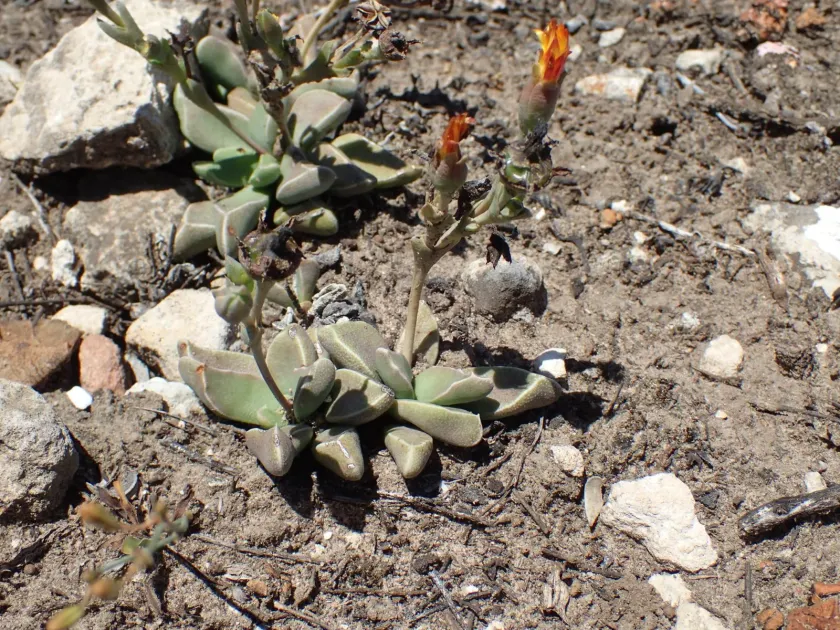
Description
Growing requirements
Rhombophyllum rhomboideum is a distinct species within the Aizoaceae family, naturally occurring in the arid regions of the Southern African Cape. It is highly adapted to intense solar radiation and minimal rainfall.
Botanically, the plant is characterized by its compact habit and diamond-shaped, fleshy leaves that store moisture. During the blooming season, it produces bright yellow, daisy-like flowers that close in the absence of direct light.
For successful cultivation, a well-draining substrate is mandatory. A mixture consisting of 50% inorganic material, such as pumice or coarse grit, and 50% specialized succulent potting soil is ideal for maintaining root health.
The plant requires full sun exposure to maintain its structural integrity. In indoor settings, it should be placed in south-facing windows to ensure maximum light penetration throughout the day.
Watering frequency should strictly follow the soak-and-dry method. During the summer growth phase, water only when the substrate is completely dry. In winter, the plant enters a dormancy period and requires almost no water.
Main diseases and pests
The most critical threat to this species is root rot, induced by excessive soil moisture and poor drainage. Once the root system is compromised, recovery is difficult and often requires propagation from cuttings.
Common pests include mealybugs, which often hide in the crevices between the leaves. Regular visual inspection is necessary to catch infestations before the insects multiply and weaken the plant.
Spider mites can also be problematic in environments with low humidity and poor ventilation. They cause characteristic stippling on the leaves, which detracts from the plant's aesthetic value and overall health.
Preventative measures involve keeping the leaf surfaces clean and avoiding splashing water on the foliage during irrigation. Proper airflow remains the best natural defense against fungal pathogens.
If an infestation occurs, application of horticultural oils or insecticidal soap is recommended. Always test the product on a small area of the plant to ensure it does not cause chemical burns.