
Rhombophyllum dolabriforme
Rhombophyllum dolabriforme
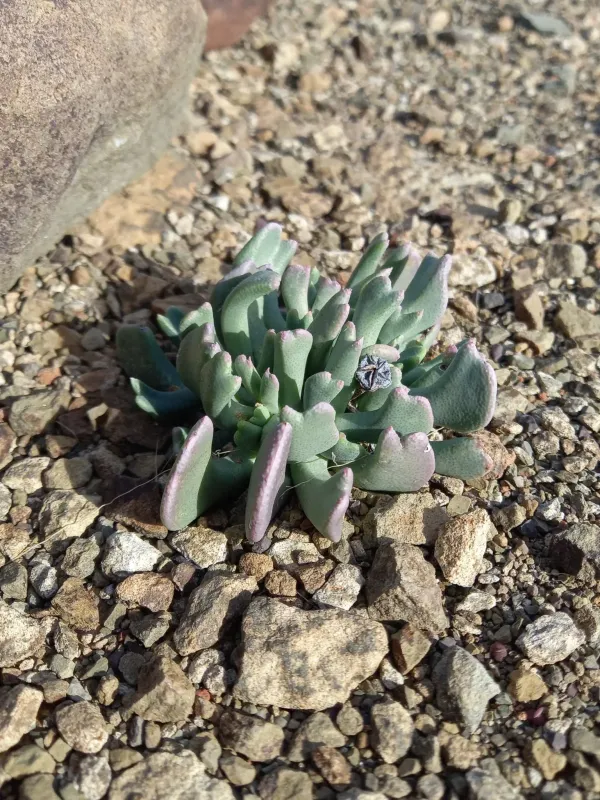
Description
Sowing dates
Sowing seeds of Rhombophyllum dolabriforme is best performed in early spring, specifically during March or April, to align with the start of the longer daylight hours. Proper lighting is essential for the healthy development of seedlings during their initial growth phase.
The substrate for sowing must be extremely well-draining, consisting of a mix of coarse sand, perlite, and a small amount of mineral-rich soil. The seeds should be sown on the surface and only lightly covered with fine grit to maintain stability and prevent drying.
Maintaining a temperature range of 20–25 degrees Celsius is critical for germination. Covering the container with a plastic film creates a humid microclimate that helps the small seeds sprout uniformly within two to four weeks.
Daily ventilation of the seedling container is mandatory to prevent fungal growth or damping off. Once the first pair of true leaves appears, the humidity should be gradually decreased to harden off the young plants to standard ambient conditions.
Seedlings of Rhombophyllum dolabriforme exhibit a slow growth rate and should be handled with care when transplanting. Only move them to individual pots once they have developed a robust enough root system to survive the transition.
Growing requirements
Belonging to the Aizoaceae family, this species is a true succulent native to the arid regions of South Africa. It thrives in high-intensity light conditions, which are required to maintain its compact, distinct leaf shape and vibrant health.
The soil must mimic the rocky, nutrient-poor environment of its natural habitat. Heavy organic soils are entirely unsuitable as they retain too much moisture, which almost inevitably leads to root rot in this specific succulent genus.
The ideal climate involves hot, dry summers and a cooling period during the winter months. During the dormant season, the plant should be kept in a dry, cool location with temperatures staying around 10–15 degrees Celsius to simulate its natural rest cycle.
Watering should be minimal and only performed when the soil has completely dried out. Always avoid wetting the leaf surfaces, as moisture trapped between the leaves can lead to tissue decay and secondary bacterial infections.
Effective air circulation is a primary requirement for the long-term health of this plant. In indoor settings, placing it near a window that allows for regular airflow or using a fan in the room helps keep the plant robust and disease-free.
Main diseases and pests
Mealybugs are the most common pests affecting this species, often congregating in the deep crevices of the leaves. Systematic monitoring and the use of targeted insecticides are necessary to control these infestations before they spread.
Fungal infections, primarily root and crown rot, are the biggest threat to this succulent. These are almost exclusively caused by overwatering or poor soil drainage, leading to a rapid breakdown of the root system and plant death.
Spider mites can become problematic in very dry and poorly ventilated indoor environments. They cause stippling on the leaves, which detracts from the plant's aesthetic value and stresses the plant, making it prone to further health issues.
Physiological oedema may occur due to irregular watering patterns. When the plant suddenly receives an influx of water after a dry spell, the cells may burst, causing water-soaked spots that are susceptible to further decay and pathogen entry.
Effective management of these threats involves a combination of consistent care practices and prompt mechanical removal of any damaged tissue. Maintaining clean gardening tools and a sterile environment significantly reduces the risk of pest and disease transmission.