
Rhigozum trichotomum
Rhigozum trichotomum
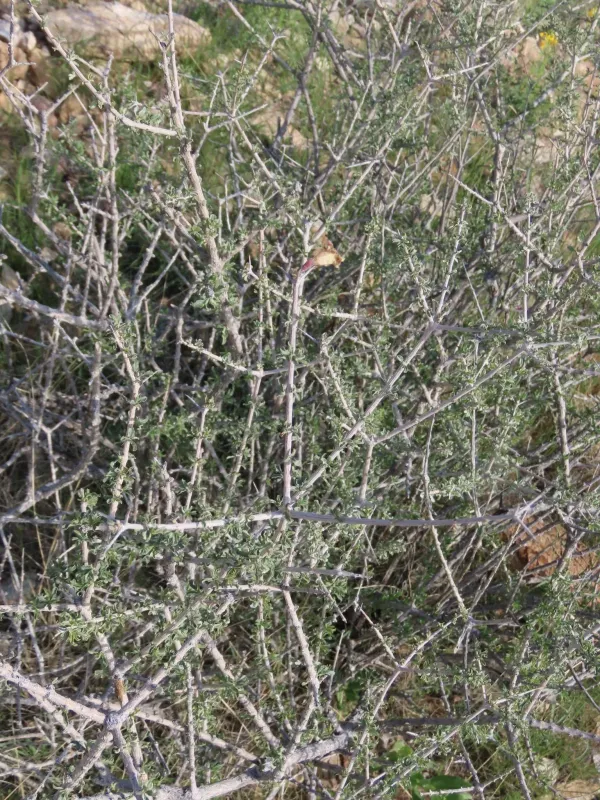
Description
Growing requirements
Rhigozum trichotomum is a resilient shrub belonging to the Bignoniaceae family, well-adapted to the harsh environments of arid zones. It typically grows as a dense, thorny bush with small leaves designed to minimize water loss.
The native habitat of this plant includes the arid regions of Southern Africa, such as Namibia and South Africa. It serves as a vital component in local ecosystems by stabilizing soil and providing shade for smaller flora.
For successful cultivation, the plant requires high levels of solar radiation and low humidity. It does not tolerate waterlogging, making well-drained, sandy, or loamy soils essential for its healthy development.
Agrotechnical management is relatively simple due to the plant's evolutionary adaptations. Irrigation is generally unnecessary once the shrub is established, as it is highly efficient at utilizing minimal soil moisture.
In agricultural practice, Rhigozum trichotomum is primarily utilized for phytoremediation, soil stabilization, and as a hedge component to protect against wind erosion in desertified areas.
Main diseases and pests
The primary threat to Rhigozum trichotomum populations is overgrazing by livestock, which prevents the natural regeneration of the species in its endemic range.
While the plant is remarkably hardy, fungal diseases can emerge if the soil remains waterlogged for extended periods, leading to root rot and premature decay.
Insect pests are typically restricted to specialized desert species that rarely cause catastrophic damage to mature shrubs, maintaining a balanced ecological relationship.
The encroachment of invasive species into the semi-arid grasslands can outcompete the shrub for limited nutrients, posing a long-term risk to its distribution.
Effective management requires the preservation of natural habitats and the implementation of rotational grazing practices to ensure the species' survival and density.