
Rhigozum obovatum
Rhigozum obovatum
Description
Growing requirements
Rhigozum obovatum is a hardy, branching shrub belonging to the Bignoniaceae family. Native to the semi-arid regions of Southern Africa, particularly the Karoo, it has evolved specific physiological traits to survive in harsh, low-rainfall environments.
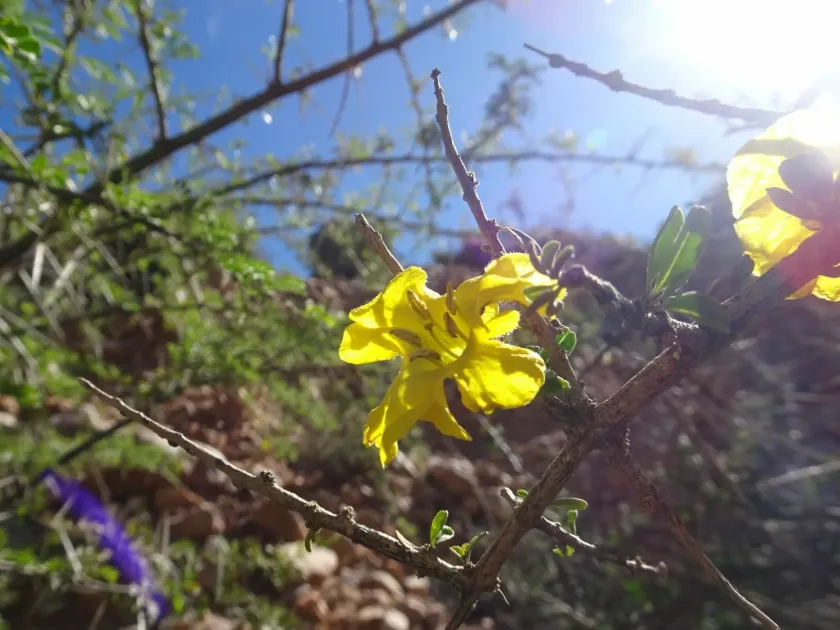
The plant is botanically recognized by its small obovate leaves bundled in clusters and its vibrant yellow, tubular flowers. It serves as an essential component of its native ecosystem, providing shade and forage for local livestock during dry seasons.
Regarding cultivation requirements, this species thrives in well-drained, sandy or gravelly soils. It demands high solar radiation and cannot tolerate waterlogged conditions, which can lead to rapid root decay if drainage is not properly managed.
The agrotechnical approach focuses on minimal intervention. Once established, the shrub requires little to no irrigation, making it a sustainable choice for land restoration and desertification control in similar climatic zones worldwide.
Economic use of Rhigozum obovatum primarily lies in livestock grazing management and ecological stabilization. Its ability to maintain foliage under stress provides a critical buffer for herd nutrition in extreme environments.
Main diseases and pests
The plant is generally robust, but susceptibility to fungal infections increases significantly in humid conditions or poorly ventilated areas. Preventive pruning is recommended to maintain air circulation within the canopy of the shrub.
Common pests include scale insects and spider mites, which typically attack the plant during prolonged periods of drought stress. Integrated pest management, focusing on early detection, is the most effective approach to minimize damage.