
Slender Lady Palm
Rhapis humilis
Description
Growing requirements
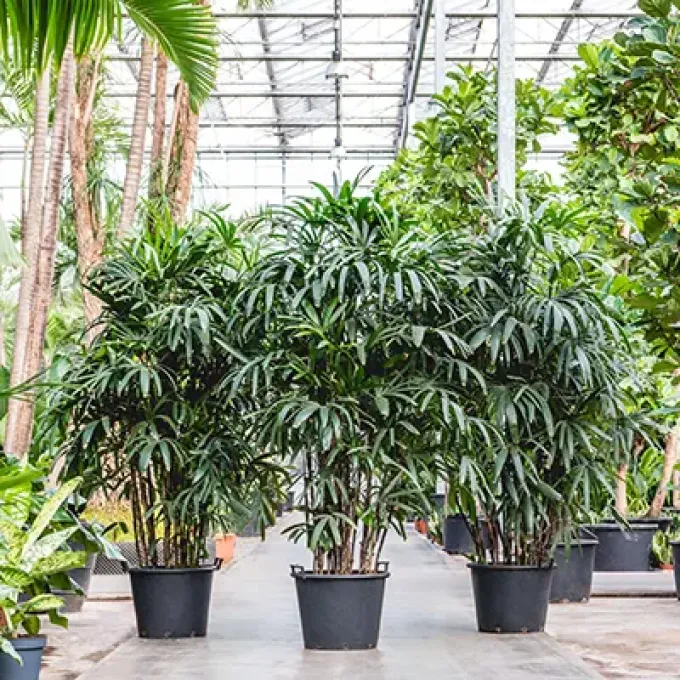
The Slender Lady Palm (Rhapis humilis) is an elegant multi-stemmed palm species belonging to the Arecaceae family. Originating from the subtropical regions of Southern China, this plant is highly prized for its slender, bamboo-like canes and deep green, fan-shaped foliage.
This crop thrives in bright, indirect light conditions. While it can tolerate lower light levels, growth speed significantly depends on consistent access to filtered sunlight. Exposure to direct harsh sun should be avoided to prevent leaf scorching and desiccation of the delicate segments.
For successful cultivation, the soil medium must be well-draining, nutrient-rich, and slightly acidic to neutral. A mixture of loam, peat, and coarse sand provides the necessary aeration to prevent root suffocation, which is critical for the long-term health of this palm.
Watering requirements are moderate; the top layer of soil should be allowed to dry out slightly before the next irrigation cycle. Overwatering is the most common cause of failure in Rhapis humilis, leading to rapid decline and root zone issues.
The primary economic use of this plant is in the ornamental horticulture industry. It is a staple in interior landscaping, high-end office buildings, and climate-controlled atriums due to its aesthetic appeal and ability to adapt to artificial indoor environments.
Main diseases and pests
Common pests that affect the Slender Lady Palm include spider mites and scale insects. These organisms often thrive in dry indoor environments; therefore, maintaining an appropriate level of ambient humidity is an effective preventative measure against infestations.
Fungal diseases are usually associated with poor soil aeration and improper drainage. Maintaining a strict sanitation protocol, including the use of sterilized pots and proper irrigation management, is essential to protect the plant from root and stem rot pathogens.