
Broadleaf lady palm
Rhapis excelsa
Description
Growing requirements
The Broadleaf lady palm (Rhapis excelsa) is a popular clumping palm species belonging to the Arecaceae family. It is native to the subtropical regions of Southern China and Taiwan, where it typically grows in the understory of dense forests, thriving in filtered light conditions.
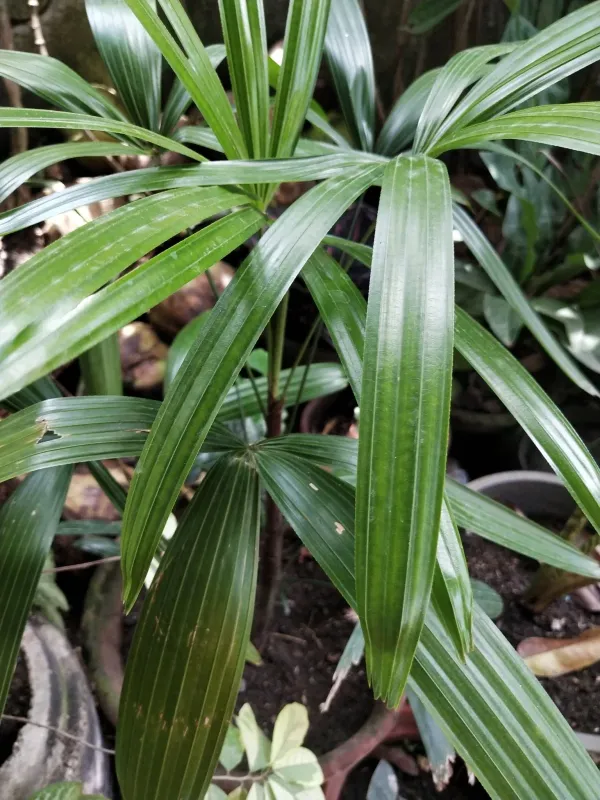
Botanically, this palm is characterized by its slender, bamboo-like stems and fan-shaped leaves that are segmented into deep, shiny, dark green leaflets. This structure allows the plant to form dense, lush clusters, making it highly valuable for indoor landscaping and greenhouse cultivation.
The cultivation of Rhapis excelsa requires a well-draining, nutrient-rich soil mix, often based on peat or coconut coir with added perlite for aeration. Maintaining a soil pH between 6.0 and 6.5 is ideal for maximizing nutrient uptake and promoting robust vegetative growth throughout the year.
Regarding climate requirements, the plant prefers temperatures ranging from 15°C to 25°C. It is relatively adaptable but shows stress when exposed to extreme temperature fluctuations or dry, heated air, which often occurs in indoor environments during the winter season.
Agrotechnical management involves regular, moderate irrigation. It is essential to allow the surface of the soil to dry out partially before re-watering to prevent the roots from suffocating. Regular feeding with a balanced liquid fertilizer during the growing season supports the development of new, healthy foliage.
Main diseases and pests
Root rot is the most significant disease affecting Rhapis excelsa, primarily caused by waterlogged soil conditions and poor drainage. Ensuring the container has adequate drainage holes is a fundamental requirement for preventing this physiological disorder.
Pests that commonly target this culture include scale insects, which appear as small brown bumps on the foliage, and mealybugs that congregate in the leaf axils. Spider mites can also manifest when humidity levels fall significantly below the threshold of 40-50 percent.
- Manual removal of insects using a cotton swab dipped in alcohol for localized infestations.
- Application of horticultural oils or insecticidal soaps as systemic control measures.
- Regular inspections of the foliage to identify pest activity at an early stage.
Maintaining proper hygiene by cleaning leaves regularly prevents dust accumulation, which otherwise provides a habitat for pests. A clean plant is also better equipped to perform photosynthesis efficiently, contributing to its overall vigor.
Strategic use of biological control agents and adhering to strict watering regimes are the primary methods for ensuring long-term plant health and ornamental value, minimizing the need for harsh chemical treatments.